
MARK 10:13-16
13 And they were bringing children to him that he might touch them, and the disciples rebuked them. 14 But when Jesus saw it, he was indignant and said to them, “Let the children come to me; do not hinder them, for to such belongs the kingdom of God. 15 Truly, I say to you, whoever does not receive the kingdom of God like a child shall not enter it.” 16 And he took them in his arms and blessed them, laying his hands on them.
10 POINTS TO PONDER
Mark 10:14 is the only verse in the Bible that records Jesus being “indignant.” ἀγανακτέω [aganakteō] is the Greek word for indignant, and it represents a level of displeasure that might be described as “very, very, very angry.”
The parents in this story were desperate for their children to meet Jesus. Who is the person in your life that you want to introduce to Jesus? Are you praying for them now? Do you have a plan to invite them to Easter Sunday?
Jesus was angry with His friends, even though He loved them. This reminds us that it is not always bad to have a friend who gets upset with us. Sometimes, our friends’ anger leads to our growth.
“Faithful are the wounds of a friend; profuse are the kisses of an enemy.” (Proverbs 27:6)
Jesus’ anger and Jesus’ blessings were not directed at people because of WHO they were (identity), but rather because of WHAT they were doing (activity).
It is possible that the disciples hindered the children because children were not considered important. The disciples were trying to make sure the important people in their world had full access to Jesus. The truth is that it is not our job to decide who can and cannot have access to Jesus.
“Letting” the children come means choosing NOT to try to control them. When we try to control other people, we almost always drive them away from ourselves and away from God.
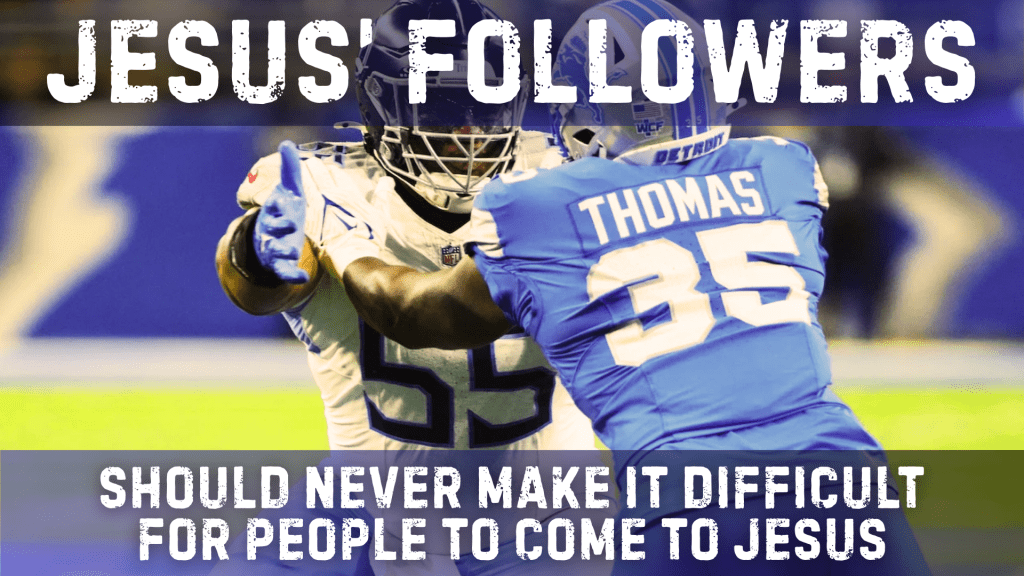
“Do not hinder them” means don’t create rules that make it harder for people to get to Jesus. Legalism gets in the way of many people’s faith.
Sometimes we hinder people by creating distractions that keep them from simply coming to Jesus. The Gospel is simple. We shouldn’t over-complicate it.
“Woe to you, scribes and Pharisees, hypocrites! For you travel across sea and land to make a single proselyte, and when he becomes a proselyte, you make him twice as much a child of hell as yourselves.” (Matthew 23:15)
Child-like faith is different than childish faith. We are called to grow to maturity in our relationship with God, but we should never lose our sense of wonder and trust in Him.
Children usually know their limits. They are aware of what they can and cannot do, and as a result, they know that they need help. Child-like faith recognizes that we are not capable of earning righteousness on our own and that we are in desperate need of saving, which only Jesus can provide.
DON’T PLAY FAVORITES
“My brothers and sisters, believers in our glorious Lord Jesus Christ must not show favoritism.”
— James 2:1
Have you ever noticed that some people are easier targets for grace than others?
We don’t like to admit it, but it’s true. We would rather show grace to certain people—and we would rather withhold it from others. Sometimes it’s because of who they are. Sometimes it’s what they’ve done. Sometimes it’s where they’re from… or even what they smell like.
If I’m honest, I often feel the pull to extend grace unevenly—to give more to one person and less to another.
But James is clear. We are commanded not to show partiality.
Not occasionally. Not situationally. Not when it’s convenient.
We cannot claim obedience to Scripture while treating some people more graciously than others.
Put On Your “Jesus Goggles”
We need to look at people through what I like to call “Jesus Goggles.”
We must learn to see people the way Jesus sees them—not the way they immediately appear to us.
Jesus didn’t categorize people the way we do:
- Rich or poor
- Attractive or unattractive
- Fun or boring
- Loud or quiet
- Outgoing or withdrawn
(You get the point.)
Jesus saw something deeper.
He saw people who needed grace.
What Changes When You See Like Jesus
When you put on Jesus Goggles, everything shifts:
- You no longer see people who have offended you—you see people who need to be offered grace.
- You no longer see people who are irritating—you see people who need to be shown grace.
- You no longer see people who drain your energy and resources—you see people who are desperate for grace.
Grace stops being selective.
It becomes reflective—reflecting the heart of Christ.
Today’s Challenge
Every time you interact with someone today, pause and ask:
How would Jesus see this person?
Then respond accordingly.
Because believers in our glorious Lord Jesus Christ must not show favoritism.
And when we see people through His eyes, grace becomes our default setting.

Click on the image to download the DiscipleQuest PDF
The DiscipleQuest PDF includes 7 days of verse study prompts. You can use these seven studies to dig deeper into the following verses about being welcoming and inviting:
- Matthew 18:5
- Acts 10:34-35
- Romans 15:7
- 1 Corinthians 9:22
- James 2:8-9
- Ephesians 2:13-14
- Matthew 25:40

Use these questions as journal prompts or as conversation starters with a group of friends or a Bible study group:
When have you felt unwelcome, dismissed, or subtly pushed away in a spiritual setting? How did that affect your willingness to engage? What emotions surface when you think about that experience?)
Think of someone in your life who seems far from Jesus right now. What assumptions do you tend to make about them? Are those assumptions hopeful… or limiting?
Read Mark 10:13–16 slowly. What exactly were the disciples doing that caused Jesus to rebuke them? What does “hinder” mean in this context? Is it passive (slowing down) or active (blocking access)?
Verse 14 says Jesus was indignant. This is the only time in the Gospels that word is used to describe Him. Why do you think this particular situation made Jesus angry? What does that tell you about what matters most to Him?
Jesus says the kingdom must be “received like a child.” From the passage and surrounding context, what qualities of a child might He be highlighting? Why do those qualities matter for entering the kingdom?
In what subtle ways might someone today “hinder” another person’s faith journey? Consider:
- Attitudes
- Tone
- Control
- Legalism
- Social favoritism
- Unrealistic expectation
Where have you seen this exhibited? How are you tempted in this way?
When do you feel tempted to control someone else’s spiritual journey? Trying to manage outcomes? Why is control so appealing to us?
Jesus was angry at barriers, not brokenness. Do you ever get more frustrated at someone’s immaturity than you do at barriers to grace? What does your anger reveal about your priorities?
If you removed the word “disciples” and inserted your name into this story, in what part of your life might Jesus say to you: “Hands off. Let them come.” Who specifically might you be unintentionally discouraging, filtering, or limiting?
What is one action step you need to take this week to stop hindering and start helping?
Examples might include:
- Initiating a welcoming conversation
- Apologizing for a harsh attitude
- Releasing control over someone’s timeline
- Speaking encouragement instead of critique
- Creating space instead of managing behavior
Write down your step. Tell someone in this group. Pray about it before you leave.
 Lake Bible Notes
Leave a comment