Tag: psalms

  • Jesus > David (8.02.2026)

    PSALM 132

    1Remember, O Lord, in David’s favor,
    all the hardships he endured,
    2how he swore to the Lord
    and vowed to the Mighty One of Jacob,
    3“I will not enter my house
    or get into my bed,
    4I will not give sleep to my eyes
    or slumber to my eyelids,
    5until I find a place for the Lord,
    a dwelling place for the Mighty One of Jacob.”

    6Behold, we heard of it in Ephrathah;
    we found it in the fields of Jaar.
    7“Let us go to his dwelling place;
    let us worship at his footstool!”

    8Arise, O Lord, and go to your resting place,
    you and the ark of your might.
    9Let your priests be clothed with righteousness,
    and let your saints shout for joy.
    10For the sake of your servant David,
    do not turn away the face of your anointed one.

    11The Lord swore to David a sure oath
    from which he will not turn back:
    “One of the sons of your body
    I will set on your throne.
    12If your sons keep my covenant
    and my testimonies that I shall teach them,
    their sons also forever
    shall sit on your throne.”

    13For the Lord has chosen Zion;
    he has desired it for his dwelling place:
    14“This is my resting place forever;
    here I will dwell, for I have desired it.
    15I will abundantly bless her provisions;
    I will satisfy her poor with bread.
    16Her priests I will clothe with salvation,
    and her saints will shout for joy.
    17There I will make a horn to sprout for David;
    I have prepared a lamp for my anointed.
    18His enemies I will clothe with shame,
    but on him his crown will shine.”

    TEN POINTS TO PONDER

    • Whether you are intentional or not, you are making room for something in your life. Make sure you are making room for God.
    • David prioritized God’s presence even over shelter and sleep. How much are you willing to give up to experience the presence of God?
    • David wasn’t looking for a building as much as he was longing for God’s presence to occupy the center of Israel’s life.
    • The greatest gift God has ever given His people is His presence. Everything else is just the overflow.
    • The priests’ clothing and the people’s joy remind us that right worship requires both God’s righteousness and God’s grace.
    • The Jewish people knew the promises of God but they hadn’t fully experienced the promises of God. Even so, they worshipped in the waiting.
    • Even though the throne of David may appear to be empty, God still reigns over all, and we can still trust His control and submit to His commands.
    • God’s promises are always true and trustworthy even when we can’t see their fulfillment in front of us.
    • Jesus is the fulfillment of God’s promises. If we have Him, we have everything.
    • God didn’t choose Zion because of what it was. He chose it because of what He intended to make it.

    In Jeremiah 22, God removed the Davidic dynasty from the line of Jeconiah. Yet… Jeconiah is mentioned in Matthew’s genealogy of Jesus. How do we reconcile this?
    A few years ago, David preached on this issue. You can watch the sermon here: LINK TO SERMON.


    Where Do You Look for Help When It Seems God Isn’t Paying Attention?

    Psalm 121:4

    Behold, he who keeps Israel

    will neither slumber nor sleep

    If you’ve ever had a difficult day, or week, or month, or year; you know that it can be hard to find comfort in words like Psalm 121:1-2. These verses were made famous by the Von Trapp family, “I lift my eyes to the hills. From where does my help come? My help comes from the LORD, who made heaven and earth.”

    You might read those verses and say, “Great. But I don’t have any hills to look up to, and I don’t feel like anyone is coming to help.” We can’t all be Maria. We don’t all stumble into the perfect family and the perfect solution for our problems.

    So, what do you do? How do you find hope, when all you see in front of you is despair?

    Recently, when reading this Psalm, I stumbled out of verses 1 and 2, sidestepped verse 3 and then got tackled by verse 4.

    Indeed, He who watches over Israel will neither slumber nor sleep

    Look! Israel’s protector does not sleep or slumber!

    Behold, he that keepeth Israel shall neither slumber nor sleep.

    Get it?

    This was written thousands of years ago. It was written during a pretty good time in Israel’s history. They had warrior-kings who were expanding their kingdoms. They were united. They were free.

    Then stuff happened.

    A civil war divided the kingdom forever.
    Evil kings oppressed and enslaved the people.
    Conquering hoards from far away lands leveled cities and carried away captives
    The holy city and the temple were destroyed
    The Assyrians, the Babylonians, the Persians, the Greeks, the Ptolemies, the Syrians and the Romans ruled Israel. Each, more oppressive than the other.
    The Romans wiped the nation from the earth.
    For nearly 2000 years, Israel had no home.
    The Muslims and the Turks and the Crusaders plundered the land.
    The Holocaust.

    and still…  Israel survives.

    Over the course of time, many people groups have been wiped from the earth. No nation, no ethnic group, no people should ever survive what Israel has been through.

    But he who is watching over Israel never closes His eyes.

    God watches over His people. We may not always get the rescue we expect, when we expect it. We may not always receive the precise solution for which we pray. We may not even feel like looking to the hills for help…

    But God is watching. He does not sleep.

    He who watches over Israel, who has watched over Israel, is also watching you.


    Click on the image to download the DiscipleQuest PDF

    The DiscipleQuest PDF includes 7 days of verse study prompts. You can use these seven studies to dig deeper into what the Bible teaches about pursuing the presence of God:

    • Psalm 27:4
    • Exodus 33:14-15
    • Psalm 42:1-2
    • Jeremiah 29:13
    • James 4:8
    • Philippians 3:8
    • Psalm 84:10

    Use these questions as journal prompts or as conversation starters with a group of friends or a Bible study group:

    Read Psalm 132:1-10. Try to summarize these verses in one or two sentences.

    David refused to rest until he found a place for the ark (vv. 3–5). What does that reveal about what mattered most to him?

    If someone observed your schedule and priorities for a month, what would they conclude is most important to you?

    How does regularly spending time with God change the way we experience the rest of life?

    How can a church help one another keep God’s presence at the center rather than simply staying busy with church activities?

    Verses 8–10 focus on God’s presence. Verses 11–18 focus on God’s promises. Why do you think the psalm holds those two ideas together?

    Israel waited centuries for God’s promise to David to be fulfilled. Why is waiting often one of the hardest parts of following God?

    What helps you continue trusting God when you can’t yet see what He is doing?

    Psalm 132 reminds us that God always keeps His promises, even if not immediately. Which promise of God are you currently clinging to?

    Two verses in this Psalm talk about “shouting for joy”. Should Christians shout for joy today? Why or why not?

  • From Restless to Relaxed (7.26.2026)

    PSALM 131

    1 My heart is not proud, O LORD,

    my eyes are not haughty.

    I do not aspire to great things

    or matters too lofty for me.

    2Surely I have stilled and quieted my soul;

    like a weaned child with his mother,

    like a weaned child is my soul within me.

    3O Israel, put your hope in the LORD,

    both now and forevermore.


    10 POINTS TO PONDER

    Contentment begins when we recognize that God is very good and we are not God.

    “This Psalm is one of the shortest to read but one of the longest to learn.” (Charles Spurgeon)

    Many of our greatest worries live in places God never intended us to carry responsibility.

    Peace begins when we stop demanding answers and start trusting the One who has them.

    A calm and quiet soul doesn’t come naturally. We must cultivate it by intentionally and repeatedly responding to life’s challenges with patient trust in God.

    Pride asks, “How can I stay in control?” Hope asks, “How can I trust God more?”

    Three questions that keep us restless and without peace: Am I enough? What is happening? Why?

    Hope is forward-facing. It’s impossible to have overflowing hope if you’re living in the past.

    Contentment means I have no demands or expectations from God. I am simply content to be His.

    God’s provision is for today, tomorrow, and forever. This is more than I can hope for from anyone else, including myself.

    SOMETIMES YOU NEED TO SAY “NO”

    One of the fascinating connections between Psalm 131 and Jesus’ temptation in the wilderness is that both passages begin with three refusals.

    David says:

    “My heart is not lifted up.
    My eyes are not raised too high.
    I do not occupy myself with things too great and too marvelous for me.”

    Jesus says:

    No to turning stones into bread.
    No to throwing Himself from the temple.
    No to bowing before Satan for the kingdoms of the world.

    The circumstances couldn’t be more different, but the battle is the same.

    Satan has always tempted humanity with the same three lies.

    1. You can HAVE whatever you want.

    “Turn these stones into bread.”

    This is an appeal to our appetites.

    If you’re hungry, eat.
    If you crave it, satisfy it.
    If it feels good, it must be right.

    Our culture has elevated desire into a moral authority. We assume our strongest feelings deserve immediate fulfillment.

    David recognized the danger. “My heart is not lifted up.”

    A proud heart insists that its desires deserve to be met. A humble heart learns contentment.

    Jesus refused to satisfy a legitimate need in an illegitimate way because He knew that life is sustained by more than physical provision. Real satisfaction is found in God.


    2. You can DO whatever you want.

    “Throw yourself down.”

    This is an appeal to autonomy.

    Nobody should tell you what to do.
    Take the risk.
    Write your own rules.
    You’ll be fine.

    David’s second refusal sounds surprisingly similar:

    “My eyes are not raised too high.”

    The eyes are often the doorway to ambition. They constantly search for something bigger, higher, or more exciting than what God has presently given.

    Jesus refused to force God’s hand. He would not manipulate the Father into proving His faithfulness.

    Faith obeys.
    Pride tests.

    God’s commands aren’t restrictions designed to steal our joy; they’re guardrails designed to preserve it.


    3. You can BE whoever you want.

    “All these kingdoms I will give You…”

    This is an appeal to identity.

    Become someone important.
    Build your platform.
    Make people admire you.
    Be the center.

    David’s final refusal reaches even deeper:

    “I do not occupy myself with things too great and too marvelous for me.”

    He wasn’t saying there are things beyond his intelligence.

    He was saying there are responsibilities, ambitions, and outcomes that belong to God—not to him.

    Jesus understood the same truth.

    He had come to receive a kingdom, but not by bypassing the cross.

    His identity would be defined by His Father, not by Satan’s shortcuts.

    When we stop trying to become someone God never called us to be, we finally become content with the person He is shaping us into.


    The Same Battle

    Jesus resisted the temptation to satisfy Himself.

    David resisted the temptation to elevate himself.

    Both refused the illusion of control.

    Perhaps that’s why Psalm 131 ends with one of the Bible’s simplest invitations:

    “O Israel, hope in the LORD from this time forth and forevermore.”

    Restlessness grows when we believe Satan’s promises.

    Peace grows when we trust God’s.

    The more we meditate on God’s Word, the easier it becomes to recognize the lies that promise satisfaction but deliver only striving.

    God’s way has always been better.

    And the moment contentment replaces control, restlessness begins to give way to peace.

    Click on the image to download the DiscipleQuest PDF

    The DiscipleQuest PDF includes 7 days of verse study prompts. You can use these seven studies to dig deeper into what the Bible teaches about choosing contentment:

    • Philippians 4:11-13
    • Proverbs 30:7-9
    • Hebrews 13:5
    • Matthew 6:31-34
    • Proverbs 19:23
    • Ecclesiastes 5:10
    • Psalm 62:1-2

    Use these questions as journal prompts or as conversation starters with a group of friends or a Bible study group:

    Read Psalm 131. Which verse is your favorite? Why?

    If you had to summarize Psalm 131 in one sentence, what would you say is David’s main message?

    Psalm 131 begins with three “I do not…” statements. Why do you think David might have struggled with these things? Can you think of times in David’s life when this might have been more of a struggle?

    What do you think David means when he says, “I have calmed and quieted my soul”? How is that different from simply feeling calm?

    Paul said, “I have learned in whatever situation I am to be content” (Philippians 4:11). How does Paul’s testimony echo David’s experience?

    Would the people closest to you describe you as restful or restless? Why or why not?

    Which of David’s three struggles do you identify with most? [A proud heart, ambitious eyes, occupying yourself with things beyond your responsibility]

    Where are you currently trying to control something that God may be asking you to trust Him with instead?

    What is a practical habit that could help you “calm and quiet” your soul more consistently (prayer, Scripture, silence, Sabbath, journaling, walking, or something else)?

  • Life in the Depths (7.19.2026)

    PSALM 130

    ​1 Out of the depths I cry to you, O LORD!
    2 O Lord, hear my voice!
    Let your ears be attentive
    to the voice of my pleas for mercy!
    3 If you, O LORD, should mark iniquities,
    O Lord, who could stand?
    4 But with you there is forgiveness,
    that you may be feared.
    5 I wait for the LORD, my soul waits,
    and in his word I hope;
    6 my soul waits for the Lord
    more than watchmen for the morning,
    more than watchmen for the morning.
    7 O Israel, hope in the LORD!
    For with the LORD there is steadfast love,
    and with him is plentiful redemption.
    8 And he will redeem Israel
    from all his iniquities.


    10 POINTS TO PONDER

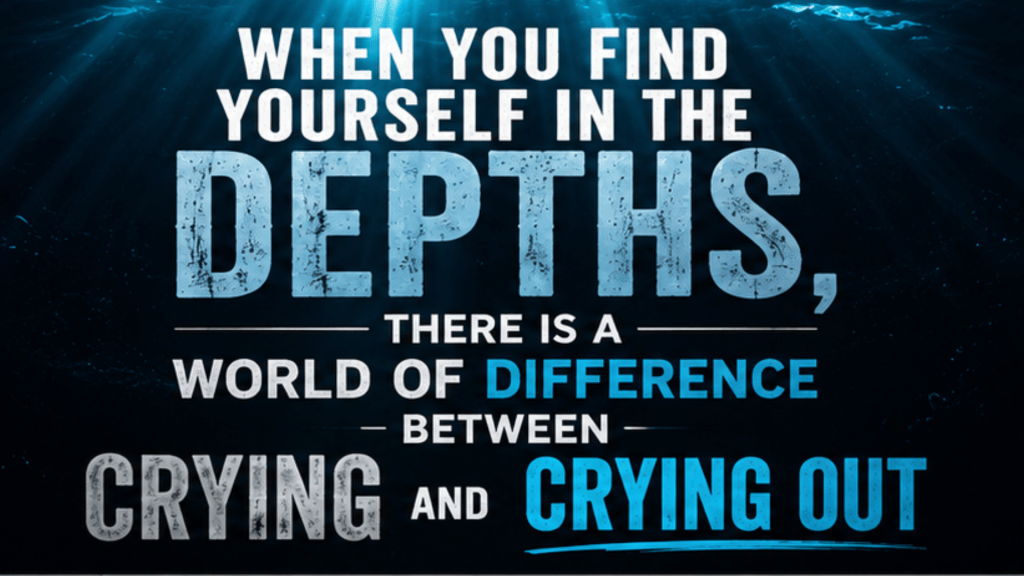
    Sometimes our difficulties are a result of our own poor choices, and sometimes they are outside of our control. Regardless of the source, we can always choose to respond by crying about them or by crying out for help with them.

    The hard times in life are not what define you. Your response to the hard times in life is what defines you.

    Complaining is like mold to the soul. The more you hold on to your gripes, the more infectious and widespread they become. Eventually, they take over and destroy your life.

    If you never pause and wait for God to work things out, you’ll never experience His deliverance. If you never experience His deliverance, your faith in Him will never grow. If your faith in Him never grows, you’ll have a hard time pausing and waiting for Him to work things out. You have to give up control at some point; it launches the cycle of trust, faith, and growth.

    “The depth is simply the height inverted, as sin is the index of moral grandeur. The cry is not only truly human, but divine as well. God is deeper than the deepest depth in man. He is holier than our deepest sin is deep. There is no depth so deep to us as when God reveals his holiness in dealing with our sin…. [And so] think more of the depth of God than the depth of your cry. The worst thing that can happen to a man is to have no God to cry to out of the depth.” (Eugene Peterson)

    To fear God is not to hide from God. Rather, it is to know Him, to love Him, to Revere Him, to worship Him, and to serve Him. However, until our sin is forgiven, we can only hide from Him.

    Every world religion seeks to assuage guilt and shame by working harder and doing more. If you don’t measure up, their rules simply teach you to work harder and do more. Yet, we know that this is an impossible exercise. We can never do enough or work hard enough to overcome the far-reaching harm of our sin. We need forgiveness, and we cannot earn or provide that for ourselves.

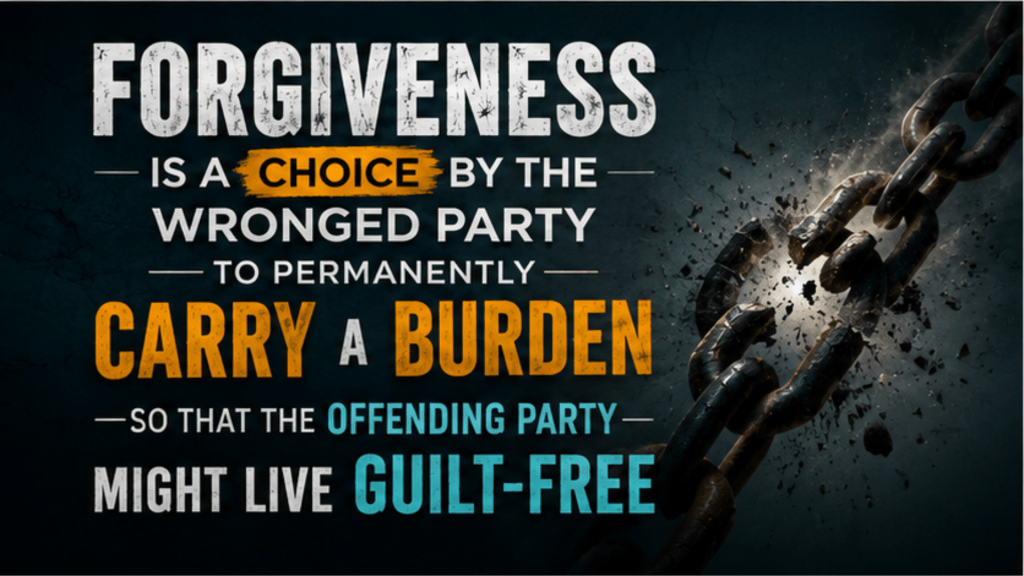
    God (in Christ) IS forgiveness. Just as Jesus is the personification of God’s love, He is also the personification of God’s forgiveness. He willingly bears the guilt-burden of our sin so that we can live freely, both now and eternally with Him.

    When I find myself in the depths of life, I can remind myself that God’s steadfast love means He is with me in the struggle. His plentiful redemption means that He has and is working on my behalf. His forgiveness means I can be confident of a future with Him.

    If my hope is in myself, I will be disappointed.
    If my hope is in my friends and family, I will be disappointed.
    If my hope is in politicians or government, I will be disappointed.
    If my hope is in role models or influencers, I will be disappointed.
    If my hope is in Jesus, I will be content.


    EVEN AT THIS LATE HOUR

    Joel, the prophet, called on the nation of Israel to repent.

    Chapter two of his writings paints a frightening picture of the impending doom his countrymen faced. He predicted the advance of a powerful attacking army such as had never been seen before. He described those days as dark, cloudy, and gloomy.

    But he also reminded Israel that their God was still able to save them.

    “Even at this late hour,” Joel said, “when things look so bad, our God can still save the day.”

    He reminded his friends that God is gracious, merciful, slow to anger, abounding in steadfast love, and One who relents from punishing.

    “Even though we don’t deserve it,” Joel preached, “God still may rescue us!”

    Joel called the nation to repent.

    A Call to Repentance

    Old people, young people—even babies—were to gather and cry out for salvation.

    This was not a time for celebration. Joel told bridegrooms and brides to leave their ceremony and join the congregation in a nationwide appeal to God.

    “Spare your people, O LORD. Do not let your reputation be mocked. Do not let people say, ‘Where is their God?’”

    A Prayer for Today

    The prayer Joel prescribed for Israel can also be prayed by you.

    You may not face an advancing horde of Assyrians, a plague of locusts, or a devastating famine. You may, however, find yourself in dark days, living under a cloud of gloom.

    Perhaps it is time for you to turn back to God, your Father, and allow Him to step in and save you.

    Use the prayer of Israel as a template for your own repentance.

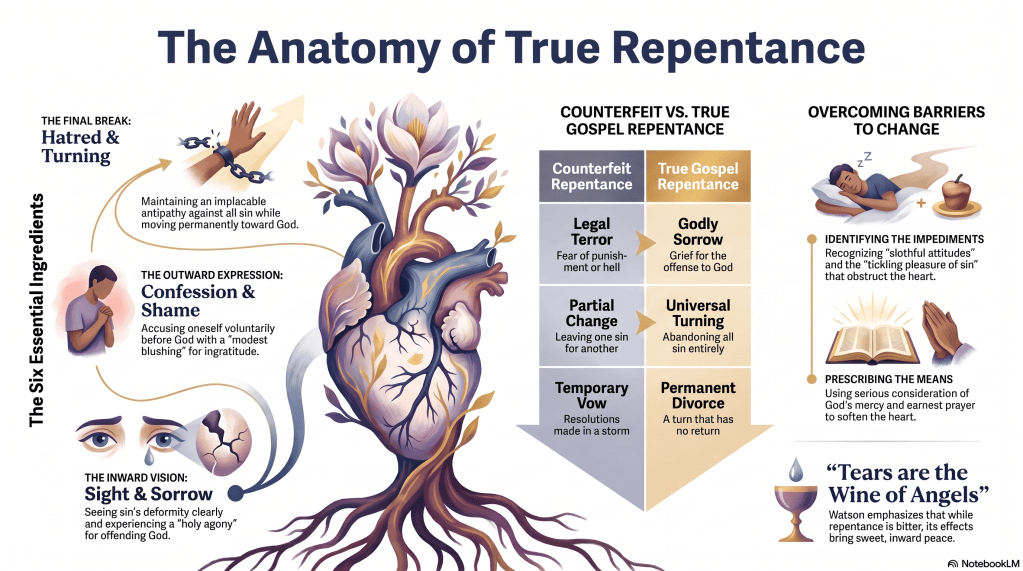
    A Truly Repentant Prayer Is About God’s Glory

    • Recognize that your sin besmirches God’s reputation.
    • Look into your heart to discover genuine and authentic pain for the negative publicity you have brought to God’s name.
    • Recognize that your salvation enhances God’s reputation.
    • Let your repentance be a promissory note to repay God’s mercy and grace with your own public worship and witness.

    Joel’s appeal remains just as relevant today as it was when he first proclaimed it:

    “Rend your hearts and not your clothing. Return to the LORD, your God, for He is gracious and merciful, slow to anger, and abounding in steadfast love, and relents from punishing.” (Joel 2:13)

    Click on the image to download the DiscipleQuest PDF

    The DiscipleQuest PDF includes 7 days of verse study prompts. You can use these seven studies to dig deeper into what the Bible teaches about waiting with hope:

    • Lamentations 3:25-26
    • Isaiah 30:18
    • Romans 8:24-25
    • James 5:7-8
    • Galatians 6:9
    • Psalm 33:18-22
    • Titus 2:11-13

    Use these questions as journal prompts or as conversation starters with a group of friends or a Bible study group:

    Do you have any good “restoration stories”? (cars, houses, relationships, etc.)

    What types of emotions result when a broken relationship is restored? Why is it often so difficult to restore a broken relationship?

    What kinds of things (words, thoughts, actions, etc.) cause our relationship with God to be broken? How do we restore our relationship with God?

    Read Psalm 51:1-6. Which of these verses make the biggest impression on you? Why?

    What character traits does David use to describe God in these verses? How does David speak of himself in these verses? Do your feelings about yourself ever seem similar to David’s?

    Read Psalm 51:7-12. What does David want God to do for him?

    In verse 12, David talks about the “joy of salvation”. Have you ever experienced the joy of salvation? How would you describe it?

    Have you ever had a time when you felt that God “restored” your relationship with Him? How did you respond?

    Read Psalm 51:13-19. Verses 13-15 talk about how we respond after God forgives us. Do you think most Christians spend enough time telling others what God has done for them? Why or why not?

    When God forgives our sins, what should we tell others about that experience? In your own words, how would you describe God’s forgiveness?

    What is your one key take-home thought after reading this Psalm?