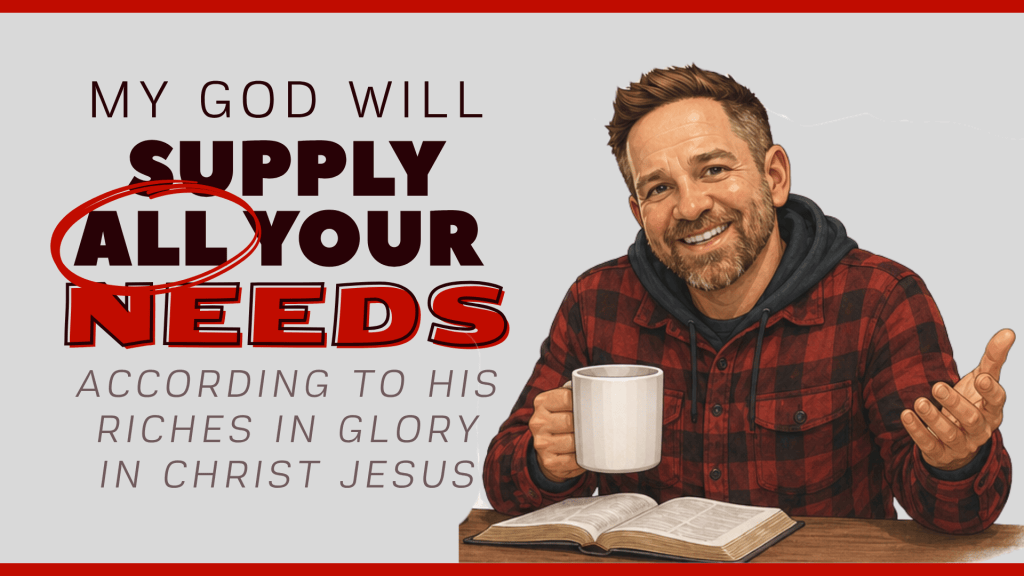
PHILIPPIANS 4:14-23
14Yet it was kind of you to share my trouble. 15And you Philippians yourselves know that in the beginning of the gospel, when I left Macedonia, no church entered into partnership with me in giving and receiving, except you only. 16Even in Thessalonica you sent me help for my needs once and again. 17Not that I seek the gift, but I seek the fruit that increases to your credit. 18I have received full payment, and more. I am well supplied, having received from Epaphroditus the gifts you sent, a fragrant offering, a sacrifice acceptable and pleasing to God. 19And my God will supply every need of yours according to his riches in glory in Christ Jesus. 20To our God and Father be glory forever and ever. Amen.
21Greet every saint in Christ Jesus. The brothers who are with me greet you. 22All the saints greet you, especially those of Caesar’s household.
23The grace of the Lord Jesus Christ be with your spirit.
LUKE 12:13-21
13Someone in the crowd said to him, “Teacher, tell my brother to divide the inheritance with me.” 14But he said to him, “Man, who made me a judge or arbitrator over you?” 15And he said to them, “Take care, and be on your guard against all covetousness, for one’s life does not consist in the abundance of his possessions.” 16And he told them a parable, saying, “The land of a rich man produced plentifully, 17and he thought to himself, ‘What shall I do, for I have nowhere to store my crops?’ 18And he said, ‘I will do this: I will tear down my barns and build larger ones, and there I will store all my grain and my goods. 19And I will say to my soul, “Soul, you have ample goods laid up for many years; relax, eat, drink, be merry.”’ 20But God said to him, ‘Fool! This night your soul is required of you, and the things you have prepared, whose will they be?’ 21So is the one who lays up treasure for himself and is not rich toward God.”
TEN POINTS TO PONDER
Just 10 verses earlier, Paul was confronting the church and challenging them to stop feuding. Now he is commending them for their kindness. This is how grace works. He began the book by talking about it, and now he’s ending the book by demonstrating it.
These verses are about generosity, both the Philippians generosity to Paul and God’s generosity to Paul. When God has been generous to us, we should be generous to others.
Paul was grateful for everything the Philippians had done for him because he realized that they had been a conduit for God’s glorious provision.
When we are generous to other people, not only are we partnering with them, but we are partnering with what God is doing in their life.
Generosity helps us release our grip on what we hold most tightly. And when we loosen our grip on those things, those things loosen their grip on us.
When I think about what I most need, or truly need, it’s helpful to think about the future. How important will this “thing” be in 5 months or 5 years? Will it even last that long?
If one of your problems is that you have so much stuff you don’t know what to do with it all, then you probably don’t really need a whole lot more!
Most of what I think I need, I actually just want. The one thing I truly need is eternal life. If I don’t have that, nothing else matters.
God’s riches are vast. He owns everything that exists. But all of that pales in comparison to His riches in Christ. And those riches are extended to us!
In verse 21, as in most of his letters, Paul makes it clear that he never does ministry alone. He relies on the people around him as much as he relies on the churches that support him. None of us are in this alone. If we aren’t relying on others, we’re missing out on the abundant life.

16 REASONS TO BE GRATEFUL TO GOD
Give thanks because of who God is:
- Creator — even in its broken state, creation still trumpets the goodness of God.
- Sustainer — if He ever removed His hands, all would fall apart.
- Provider — He provides all our needs (not necessarily our wants)
- Healer — every earthly healing is a small taste of the eternal healing that waits for us all
- Savior — history is full of stories recounting God’s saving action on behalf of His people
- Redeemer — He spared no expense to buy us back from our rebellion
Give thanks because of what God has done:
- He chose Abraham — from Abraham he launched a new nation and inaugurated a redemptive plan
- He rescued His people — by humbling the world’s superpower, God displayed His power
- He delivered a remnant — in the midst of judgment and destruction, God saved a few to carry on His plan
- He sent His Son — Jesus came to do for us what we could never do for ourselves
- He sent His Spirit — a comforter, a guide, a counselor, a convictor, He is with us forever
- He launched His church — a global community, united by love for Christ and the experience of salvation
Give thanks because of what God has promised:
- An inheritance — reserved for us by God. We have hope that this life is NOT all there is
- Complete salvation — in the future we will experience salvation from the power & presence of sin
- Eternal life — death is not the end. On the other side of the grave is a brilliant, exhilarating & perfect life
- All things new — no more sorrow or pain or death. Eden Restored!

Click on the image to download the DiscipleQuest PDF
The DiscipleQuest PDF includes 7 days of verse study prompts. You can use these seven studies to dig deeper into what the Bible teaches about God’s provision (remember to check out surrounding verses if you need more context):
- Genesis 22:13-14
- Psalm 23:1
- Ephesians 1:3
- Psalm 37:25
- John 6:35
- Matthew 7:9-11
- Romans 8:31-32

Use these questions as journal prompts or as conversation starters with a group of friends or a Bible study group:
Do you generally think you have too much or too little? Why?
Read Luke 12:13-21. Have a few people try to summarize this parable with just one word.
Jesus used a question from the crowd to launch this parable, but He made it clear that it was a bad question. What was wrong with the question (or the attitude behind the question) in verses 13-15?
In verses 15, Jesus warned against all kinds of greed or covetousness. What are some different ways that greed can creep into our mind?
Notice how often the rich man used words like, “I”, “me” or “my”. What does that tell you about him?
If the rich man had been focused on gratitude, how might he have expressed gratitude to God in this story?
From the outside looking in, most people would have thought the rich man was highly successful. Why is it so easy for us to develop the wrong mindset about success in life?
The rich man’s life was full of safety, security, comfort, and convenience. How can these four things distract us from our relationship with God? How are you tempted to place too high a value on these things?
If you could give one piece of advice to the rich man, what would it be?
How does the story of the rich man challenge you? What is something you need to change in the way you think or the way you act? How will you take a step in this direction this week?

PHILIPPIANS: Line by line
Philippians 4:14-23: All your needs
14. Yet it was kind of you to share my trouble.
Even though much in his life was not going well, Paul never stopped being others-focused. He expressed gratitude and encourages the Philippians. Even though they were far away, they hadn’t left him alone, and he appreciated their concern and their provision.
15. And you Philippians yourselves know that in the beginning of the gospel, when I left Macedonia, no church entered into partnership with me in giving and receiving, except you only.
Paul’s special relationship with the church dated back to the beginning of their time together. During his early missionary journeys, they were one of the only churches who supported him. He uses the word partnership to make sure they understand that all of his Gospel work is only possibly because of their support. Because they shared in the work, they also get to share in the credit. Those who were saved through Paul’s ministry were saved in part because of the Philippians generosity.
16. Even in Thessalonica you sent me help for my needs once and again.
When Paul left Philippi, after starting the church there, he went to Thessalonica. It was right around the corner. And that quickly, the church in Philippi began supporting his work. They didn’t wait, they didn’t need to “grow more mature” or become more stable financially. They immediately started sacrificing so that they could contribute to the Kingdom mission.
17. Not that I seek the gift, but I seek the fruit that increases to your credit.
Paul is essentially saying, “I don’t want something FROM you. I want something FOR you.” The gifts he received were useful for him, but even more so the gifts were good for the Philippians. By sacrificing and being generous, Paul knew they would grow to be more Christlike and that their trust in God’s provision would be strengthened.
18a. I have received full payment, and more. I am well supplied, having received from Epaphroditus the gifts you sent,
Paul is assuring them that Epaphroditus was a trustworthy messenger and that he had indeed delivered everything they had sent. Even more importantly, it was plenty. Paul had everything he needed and more, thanks to them.
18b.a fragrant offering, a sacrifice acceptable and pleasing to God.
This verse sounds like Romans 12:1. Our lives should be offered as sacrifice that is pleasing to God. When we make personal sacrifices so that we can be generous to others, God is pleased.
19a. And my God
Paul’s dependance on God is the result of his relationship with God. To him, God is not an impersonal force or an unknowable deity. God is Paul’s God, they have a relationship. He is intimately acquainted with God’s presence.
19b. will supply every need of yours
It’s easy to get this verse wrong. The promise is not that all of our desires will be supplied, but that all of our needs will be supplied. We should never be surprised, confused, or disappointed that God hasn’t given us what we want. He never promised He would. And if He doesn’t give us something, it’s because He knows we don’t need it and He knows it wouldn’t be best for us.
19c.according to his riches in glory in Christ Jesus.
The manner of provision helps us understand the nature of the needs. That Jesus is the provision means that the need is sin. Only Jesus can provide salvation and forgiveness, and there is nothing we need more than that. If were given everything we ever wanted in life, but didn’t receive Jesus, it would all mean nothing at the end. If we receive nothing in life, but have Jesus at the end, it will mean everything.
20. To our God and Father be glory forever and ever. Amen.
When we understand that God has already met our most important (and only) need through Christ, we are left with nothing to do but to worship and glorify Him.
21-22. Greet every saint in Christ Jesus. The brothers who are with me greet you. All the saints greet you, especially those of Caesar’s household.
Everything was relational to Paul. He wanted the church in Philippians to know that they were not alone. He wanted to remind them that they were working together with people they didn’t know and who they would likely never meet. The kingdom of God is much larger than any one person or any one Church.
23. The grace of the Lord Jesus Christ be with your spirit.
Paul ends where he began. With the grace of God. We are at peace with God because He extended grace to us in the life, death, and resurrection of Jesus. In the same way, we can be at peace with others if we are willing to extend grace to them. Where peace is lacking, grace is likely missing. Where grace is not given, peace will not grow. If you want to live at peace, be a person who extends grace.
 Lake Bible Notes
Leave a comment