GENESIS 9:1-17
[1] And God blessed Noah and his sons and said to them, “Be fruitful and multiply and fill the earth. [2] The fear of you and the dread of you shall be upon every beast of the earth and upon every bird of the heavens, upon everything that creeps on the ground and all the fish of the sea. Into your hand they are delivered. [3] Every moving thing that lives shall be food for you. And as I gave you the green plants, I give you everything. [4] But you shall not eat flesh with its life, that is, its blood. [5] And for your lifeblood I will require a reckoning: from every beast I will require it and from man. From his fellow man I will require a reckoning for the life of man.
[6] “Whoever sheds the blood of man,
by man shall his blood be shed,
for God made man in his own image.
[7] And you, be fruitful and multiply, increase greatly on the earth and multiply in it.”
[8] Then God said to Noah and to his sons with him, [9] “Behold, I establish my covenant with you and your offspring after you, [10] and with every living creature that is with you, the birds, the livestock, and every beast of the earth with you, as many as came out of the ark; it is for every beast of the earth. [11] I establish my covenant with you, that never again shall all flesh be cut off by the waters of the flood, and never again shall there be a flood to destroy the earth.” [12] And God said, “This is the sign of the covenant that I make between me and you and every living creature that is with you, for all future generations: [13] I have set my bow in the cloud, and it shall be a sign of the covenant between me and the earth. [14] When I bring clouds over the earth and the bow is seen in the clouds, [15] I will remember my covenant that is between me and you and every living creature of all flesh. And the waters shall never again become a flood to destroy all flesh. [16] When the bow is in the clouds, I will see it and remember the everlasting covenant between God and every living creature of all flesh that is on the earth.” [17] God said to Noah, “This is the sign of the covenant that I have established between me and all flesh that is on the earth.”
TEN POINTS TO PONDER
We serve a God who never changes, but who wants to radically change us! God’s character, promises, and purposes are unchanging. But He loves us too much to leave us as we are.
God’s plan hasn’t changed because God’s love for people hasn’t changed. Because God loved people, He wanted His creation to be full of them. And because God loves people, He wants His eternal creation to be full of them!
The image of God has not been lost. Even after humanity’s rebellion and the judgment of the flood, every human being still bears God’s image. Our value comes from who created us, not what we’ve accomplished.
You can’t have a rainbow without rain. God’s promises don’t mean we’ll never experience storms. They remind us that He remains faithful through them.
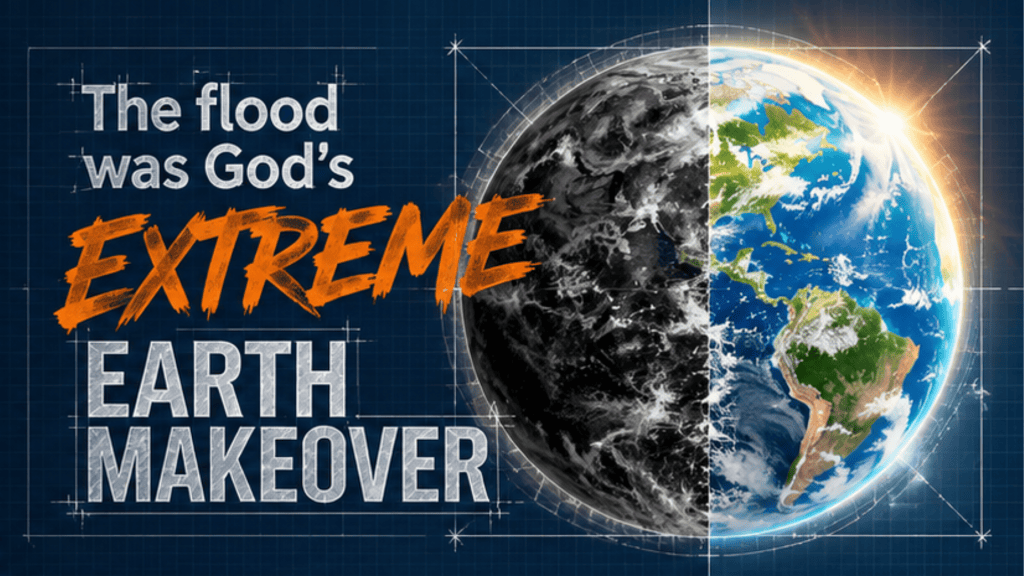
God makes things new, but the former things must pass away. For Noah and his family to experience a new start, the former world had to be washed away. For us to experience a new start, the former life must be left behind.
God always saves us FROM something and TO something. If we’re still holding on to what He saved us from, we cannot fully experience what He saved us to.
Your old life is not compatible with your new start. You cannot experience the fullness of the life Jesus offers while continuing to embrace the attitudes, habits, and values of the life He saved you from.
God’s mercies are new every morning, even when yesterday was terrible. You can begin your day reviewing your struggles or reviewing God’s mercies. What you choose to focus on will influence how you experience the day ahead.
A new start requires a selective memory. You cannot always choose what memories creep in, but you do get to choose which memories you hold onto and replay! Don’t become so consumed with where you’ve been that you miss where God is taking you.
The new start you need is only possible through Jesus. Jesus has already done all the work necessary to remove the stain of sin from your life. You don’t have to make yourself new; you need to embrace the new life He offers.
CAN YOU TAKE A MULLIGAN IN LIFE?
I love to play golf. Unfortunately, I don’t get to play as often as I’d like, which means my game can be a little unpredictable. During a recent round with a friend, I stepped up to the first tee, hoping to get things started on the right foot.
It didn’t go well.
I hit my tee shot very solidly…and very far left. It’s never a good sign when the starter (who watches people tee off all day long) looks at your shot and says, “You won’t be finding that one.”
Fortunately, my friend believes in mulligans.
If you’re not familiar with the term, a mulligan is golf lingo for a “do-over.” Many golfers use them on the first tee, while others save them for later in the round. I’ve played with golfers who don’t just use mulligans. They also invoke hooligans, shenanigans, and do-agains!
The beauty of a mulligan is that you can pretend a bad shot never happened. You simply hit another ball and don’t count the first one.
Wouldn’t it be great if life worked that way?
Imagine being able to erase a bad decision, take another shot, and pretend the whole thing never happened. Would your life look different today if you could take a mulligan or two?
Here’s the bad news: Mulligans aren’t allowed in real golf.
If you hit your tee shot out of bounds and then hit another one, that second shot counts as your third. Your ball might be in a great position now, but there’s still a penalty for the first shot.
And that’s a lot like life.
You can always make a new start, but that doesn’t mean you won’t have a price to pay.
Making a better decision today doesn’t automatically erase the consequences of yesterday’s bad decision. A new beginning might help minimize the long-term damage, but it won’t necessarily eliminate all the ramifications.
In life, we often get opportunities to try again, but we rarely get genuine do-overs. What we’ve already done can’t simply be undone.
But that shouldn’t be depressing. It should be inspiring!
If we can’t erase our mistakes, we might as well learn from them! If we’re going to pay the price for our errors, we might as well get our money’s worth.
Instead of spending our lives regretting what went wrong, we can figure out why it went wrong and take steps to make sure it doesn’t happen again.
I realize not everything in life can be reduced to a simple formula or a three-step process…but I sure like to try!
So here are three important steps to making the most of a new start.
1. Determine Exactly What Went Wrong
Don’t settle for a vague explanation or a convenient excuse.
It’s easy to say, “I made a mistake,” or “Things just didn’t work out.” But those statements don’t tell us anything about why the problem happened.
Was it a poor decision? A careless word? A bad habit? A faulty assumption? A failure to listen? Maybe you ignored advice you should have taken seriously.
If you don’t understand what went wrong, you’re likely to repeat it.
Take the time to identify the specific decision, action, or attitude that created the problem. Be honest with yourself, even when the truth is uncomfortable.
You can’t fix a problem you refuse to identify.
2. React by Fixing the Problem
Once you’ve identified what went wrong, do something about it!
Sometimes the solution is simple. You replace a faulty part, correct an error, or change a process.
Other times, fixing the problem requires something much more difficult. You might need to admit you were wrong, apologize to someone you’ve hurt, rebuild trust, or take responsibility for a decision you’d rather forget.
If the problem was an accident, clean up the mess. If the problem is systemic, fix the system. If the problem was your attitude, change your attitude.
Taking responsibility for your mistakes means doing more than admitting them. It means taking action to make things right.
You may not be able to undo everything that happened, but you can usually do something to improve what happens next.
3. Act Wisely to Avoid the Same Mistake
Here’s where real growth happens.
It’s one thing to recognize a mistake. It’s another thing to correct it. But if you really want a new start, you need to make sure you don’t keep repeating the same mistakes.
You cannot expect different results if you keep making the same choices.
Sometimes that means changing your habits. Sometimes it means changing your priorities, your routines, or the people you allow to influence you.
Maybe you need to go different places, have different conversations, read different books, establish different boundaries, or develop different relationships.
Whatever the change looks like, the principle is simple:
If you want something different in your life, you need to start doing something differently.
Don’t just promise yourself that you’ll try harder next time. Figure out what needs to change, make a plan, and then follow through.
After all, the goal isn’t simply to recover from your last mistake. It’s to become the kind of person who is less likely to make that mistake again.
A New Start Is Still Possible
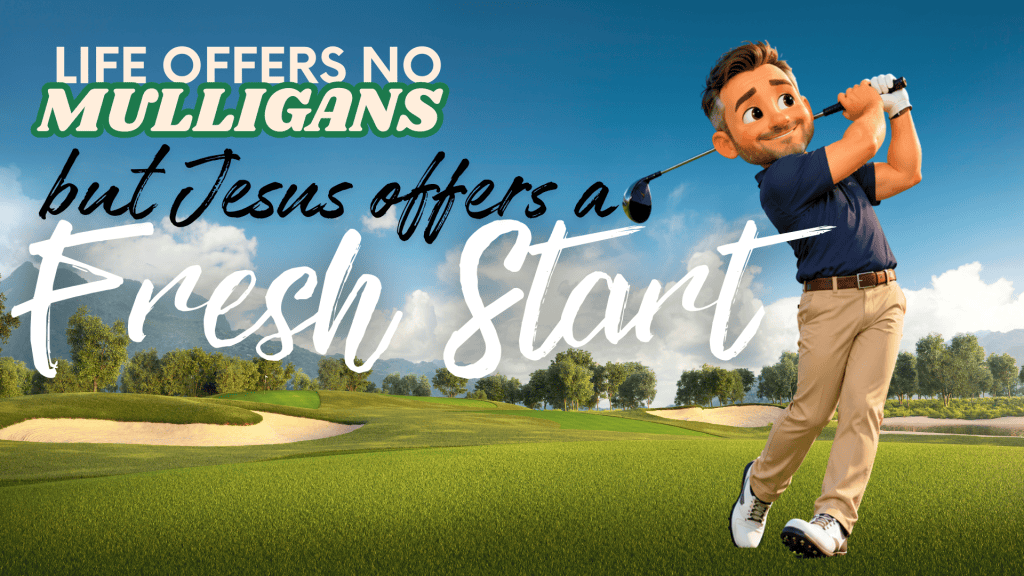
Life doesn’t give us mulligans. We can’t erase every bad decision, undo every careless word, or pretend our mistakes never happened.
But we can learn. We can grow. We can change.
And that’s good news, because your past mistakes don’t have to determine your future decisions.
You may not get to replay yesterday, but you do get to decide how you’re going to live today.
So stop wishing you could take another shot at the past. Pay attention to what went wrong, make things right where you can, and make wiser choices moving forward.
Life gives no mulligans. But if we’re willing to learn from our mistakes, we don’t need a do-over. We just need to make the most of our next opportunity.

Click on the image to download the DiscipleQuest PDF
Use these seven passages for this week’s daily verse studies. They will help you to focus more on faith and God’s deliverance.
- Ezekiel 36:26
- Romans 6:4
- Romans 12:2
- Galatians 2:20
- John 10:10
- Colossians 3:1-2
- Philippians 3:13-14

Use these questions as journal prompts or as conversation starters with a group of friends or a Bible study group:
What is the oldest thing you own? What is the newest thing you own?
Read Mark 2:18-22.
How do you feel about fasting? How often do you fast (if ever)? Why (or why not)?
In this passage, Jesus is less concerned with fasting and more concerned with the idea of life-change. In these verses, He emphasizes the superiority of His new life over the old life of sin.
What do you think is the point Jesus is making in verse 21?
What do you think is the point Jesus is making in verse 22?
How does your old life not FIT with the new life Jesus offers?
Prior to salvation, we all have habits, patterns, desires and plans. Think about each of these and discuss how they change after someone meets Christ.
(Colossians 3 and Galatians 5 may be helpful as you think through these questions)
What are the old life’s habits? What are the new life’s habits?
What are the old life’s patterns? What are the new life’s patterns?
What are the old life’s desires? What are the new life’s desires?
What are the old life’s plans? What are the new life’s plans?
How can holding on to old ways keep someone from receiving something new? Why are people sometimes afraid of letting go of the old?
What are the old things in your life which you want to let go? What would help you to let go of these things?
What new things can you accept from Jesus to replace the old you are letting go?
What is one thing you will do this week in response to this study?


Leave a Reply