1Remember, O Lord, in David’s favor, all the hardships he endured, 2how he swore to the Lord and vowed to the Mighty One of Jacob, 3“I will not enter my house or get into my bed, 4I will not give sleep to my eyes or slumber to my eyelids, 5until I find a place for the Lord, a dwelling place for the Mighty One of Jacob.”
6Behold, we heard of it in Ephrathah; we found it in the fields of Jaar. 7“Let us go to his dwelling place; let us worship at his footstool!”
8Arise, O Lord, and go to your resting place, you and the ark of your might. 9Let your priests be clothed with righteousness, and let your saints shout for joy. 10For the sake of your servant David, do not turn away the face of your anointed one.
11The Lord swore to David a sure oath from which he will not turn back: “One of the sons of your body I will set on your throne. 12If your sons keep my covenant and my testimonies that I shall teach them, their sons also forever shall sit on your throne.”
13For the Lord has chosen Zion; he has desired it for his dwelling place: 14“This is my resting place forever; here I will dwell, for I have desired it. 15I will abundantly bless her provisions; I will satisfy her poor with bread. 16Her priests I will clothe with salvation, and her saints will shout for joy. 17There I will make a horn to sprout for David; I have prepared a lamp for my anointed. 18His enemies I will clothe with shame, but on him his crown will shine.”
TEN POINTS TO PONDER
Whether you are intentional or not, you are making room for something in your life. Make sure you are making room for God.
David prioritized God’s presence even over shelter and sleep. How much are you willing to give up to experience the presence of God?
David wasn’t looking for a building as much as he was longing for God’s presence to occupy the center of Israel’s life.
The greatest gift God has ever given His people is His presence. Everything else is just the overflow.
The priests’ clothing and the people’s joy remind us that right worship requires both God’s righteousness and God’s grace.
The Jewish people knew the promises of God but they hadn’t fully experienced the promises of God. Even so, they worshipped in the waiting.
Even though the throne of David may appear to be empty, God still reigns over all, and we can still trust His control and submit to His commands.
God’s promises are always true and trustworthy even when we can’t see their fulfillment in front of us.
Jesus is the fulfillment of God’s promises. If we have Him, we have everything.
God didn’t choose Zion because of what it was. He chose it because of what He intended to make it.
In Jeremiah 22, God removed the Davidic dynasty from the line of Jeconiah. Yet… Jeconiah is mentioned in Matthew’s genealogy of Jesus. How do we reconcile this? A few years ago, David preached on this issue. You can watch the sermon here: LINK TO SERMON.
Where Do You Look for Help When It Seems God Isn’t Paying Attention?
Psalm 121:4
Behold, he who keeps Israel
will neither slumber nor sleep
If you’ve ever had a difficult day, or week, or month, or year; you know that it can be hard to find comfort in words like Psalm 121:1-2. These verses were made famous by the Von Trapp family, “I lift my eyes to the hills. From where does my help come? My help comes from the LORD, who made heaven and earth.”
You might read those verses and say, “Great. But I don’t have any hills to look up to, and I don’t feel like anyone is coming to help.” We can’t all be Maria. We don’t all stumble into the perfect family and the perfect solution for our problems.
So, what do you do? How do you find hope, when all you see in front of you is despair?
Recently, when reading this Psalm, I stumbled out of verses 1 and 2, sidestepped verse 3 and then got tackled by verse 4.
Indeed, He who watches over Israel will neither slumber nor sleep
Look! Israel’s protector does not sleep or slumber!
Behold, he that keepeth Israel shall neither slumber nor sleep.
Get it?
This was written thousands of years ago. It was written during a pretty good time in Israel’s history. They had warrior-kings who were expanding their kingdoms. They were united. They were free.
Then stuff happened.
A civil war divided the kingdom forever. Evil kings oppressed and enslaved the people. Conquering hoards from far away lands leveled cities and carried away captives The holy city and the temple were destroyed The Assyrians, the Babylonians, the Persians, the Greeks, the Ptolemies, the Syrians and the Romans ruled Israel. Each, more oppressive than the other. The Romans wiped the nation from the earth. For nearly 2000 years, Israel had no home. The Muslims and the Turks and the Crusaders plundered the land. The Holocaust.
and still… Israel survives.
Over the course of time, many people groups have been wiped from the earth. No nation, no ethnic group, no people should ever survive what Israel has been through.
But he who is watching over Israel never closes His eyes.
God watches over His people. We may not always get the rescue we expect, when we expect it. We may not always receive the precise solution for which we pray. We may not even feel like looking to the hills for help…
But God is watching. He does not sleep.
He who watches over Israel, who has watched over Israel, is also watching you.
Click on the image to download the DiscipleQuest PDF
The DiscipleQuest PDF includes 7 days of verse study prompts. You can use these seven studies to dig deeper into what the Bible teaches about pursuing the presence of God:
Psalm 27:4
Exodus 33:14-15
Psalm 42:1-2
Jeremiah 29:13
James 4:8
Philippians 3:8
Psalm 84:10
Use these questions as journal prompts or as conversation starters with a group of friends or a Bible study group:
Read Psalm 132:1-10. Try to summarize these verses in one or two sentences.
David refused to rest until he found a place for the ark (vv. 3–5). What does that reveal about what mattered most to him?
If someone observed your schedule and priorities for a month, what would they conclude is most important to you?
How does regularly spending time with God change the way we experience the rest of life?
How can a church help one another keep God’s presence at the center rather than simply staying busy with church activities?
Verses 8–10 focus on God’s presence. Verses 11–18 focus on God’s promises. Why do you think the psalm holds those two ideas together?
Israel waited centuries for God’s promise to David to be fulfilled. Why is waiting often one of the hardest parts of following God?
What helps you continue trusting God when you can’t yet see what He is doing?
Psalm 132 reminds us that God always keeps His promises, even if not immediately. Which promise of God are you currently clinging to?
Two verses in this Psalm talk about “shouting for joy”. Should Christians shout for joy today? Why or why not?
Contentment begins when we recognize that God is very good and we are not God.
“This Psalm is one of the shortest to read but one of the longest to learn.” (Charles Spurgeon)
Many of our greatest worries live in places God never intended us to carry responsibility.
Peace begins when we stop demanding answers and start trusting the One who has them.
A calm and quiet soul doesn’t come naturally. We must cultivate it by intentionally and repeatedly responding to life’s challenges with patient trust in God.
Pride asks, “How can I stay in control?” Hope asks, “How can I trust God more?”
Three questions that keep us restless and without peace: Am I enough? What is happening? Why?
Hope is forward-facing. It’s impossible to have overflowing hope if you’re living in the past.
Contentment means I have no demands or expectations from God. I am simply content to be His.
God’s provision is for today, tomorrow, and forever. This is more than I can hope for from anyone else, including myself.
SOMETIMES YOU NEED TO SAY “NO”
One of the fascinating connections between Psalm 131 and Jesus’ temptation in the wilderness is that both passages begin with three refusals.
David says:
“My heart is not lifted up. My eyes are not raised too high. I do not occupy myself with things too great and too marvelous for me.”
Jesus says:
No to turning stones into bread. No to throwing Himself from the temple. No to bowing before Satan for the kingdoms of the world.
The circumstances couldn’t be more different, but the battle is the same.
Satan has always tempted humanity with the same three lies.
1. You can HAVE whatever you want.
“Turn these stones into bread.”
This is an appeal to our appetites.
If you’re hungry, eat. If you crave it, satisfy it. If it feels good, it must be right.
Our culture has elevated desire into a moral authority. We assume our strongest feelings deserve immediate fulfillment.
David recognized the danger. “My heart is not lifted up.”
A proud heart insists that its desires deserve to be met. A humble heart learns contentment.
Jesus refused to satisfy a legitimate need in an illegitimate way because He knew that life is sustained by more than physical provision. Real satisfaction is found in God.
2. You can DO whatever you want.
“Throw yourself down.”
This is an appeal to autonomy.
Nobody should tell you what to do. Take the risk. Write your own rules. You’ll be fine.
David’s second refusal sounds surprisingly similar:
“My eyes are not raised too high.”
The eyes are often the doorway to ambition. They constantly search for something bigger, higher, or more exciting than what God has presently given.
Jesus refused to force God’s hand. He would not manipulate the Father into proving His faithfulness.
Faith obeys. Pride tests.
God’s commands aren’t restrictions designed to steal our joy; they’re guardrails designed to preserve it.
3. You can BE whoever you want.
“All these kingdoms I will give You…”
This is an appeal to identity.
Become someone important. Build your platform. Make people admire you. Be the center.
David’s final refusal reaches even deeper:
“I do not occupy myself with things too great and too marvelous for me.”
He wasn’t saying there are things beyond his intelligence.
He was saying there are responsibilities, ambitions, and outcomes that belong to God—not to him.
Jesus understood the same truth.
He had come to receive a kingdom, but not by bypassing the cross.
His identity would be defined by His Father, not by Satan’s shortcuts.
When we stop trying to become someone God never called us to be, we finally become content with the person He is shaping us into.
The Same Battle
Jesus resisted the temptation to satisfy Himself.
David resisted the temptation to elevate himself.
Both refused the illusion of control.
Perhaps that’s why Psalm 131 ends with one of the Bible’s simplest invitations:
“O Israel, hope in the LORD from this time forth and forevermore.”
Restlessness grows when we believe Satan’s promises.
Peace grows when we trust God’s.
The more we meditate on God’s Word, the easier it becomes to recognize the lies that promise satisfaction but deliver only striving.
God’s way has always been better.
And the moment contentment replaces control, restlessness begins to give way to peace.
Click on the image to download the DiscipleQuest PDF
The DiscipleQuest PDF includes 7 days of verse study prompts. You can use these seven studies to dig deeper into what the Bible teaches about choosing contentment:
Philippians 4:11-13
Proverbs 30:7-9
Hebrews 13:5
Matthew 6:31-34
Proverbs 19:23
Ecclesiastes 5:10
Psalm 62:1-2
Use these questions as journal prompts or as conversation starters with a group of friends or a Bible study group:
Read Psalm 131. Which verse is your favorite? Why?
If you had to summarize Psalm 131 in one sentence, what would you say is David’s main message?
Psalm 131 begins with three “I do not…” statements. Why do you think David might have struggled with these things? Can you think of times in David’s life when this might have been more of a struggle?
What do you think David means when he says, “I have calmed and quieted my soul”? How is that different from simply feeling calm?
Paul said, “I have learned in whatever situation I am to be content” (Philippians 4:11). How does Paul’s testimony echo David’s experience?
Would the people closest to you describe you as restful or restless? Why or why not?
Which of David’s three struggles do you identify with most? [A proud heart, ambitious eyes, occupying yourself with things beyond your responsibility]
Where are you currently trying to control something that God may be asking you to trust Him with instead?
What is a practical habit that could help you “calm and quiet” your soul more consistently (prayer, Scripture, silence, Sabbath, journaling, walking, or something else)?
1 Out of the depths I cry to you, O LORD! 2 O Lord, hear my voice! Let your ears be attentive to the voice of my pleas for mercy! 3 If you, O LORD, should mark iniquities, O Lord, who could stand? 4 But with you there is forgiveness, that you may be feared. 5 I wait for the LORD, my soul waits, and in his word I hope; 6 my soul waits for the Lord more than watchmen for the morning, more than watchmen for the morning. 7 O Israel, hope in the LORD! For with the LORD there is steadfast love, and with him is plentiful redemption. 8 And he will redeem Israel from all his iniquities.
10 POINTS TO PONDER
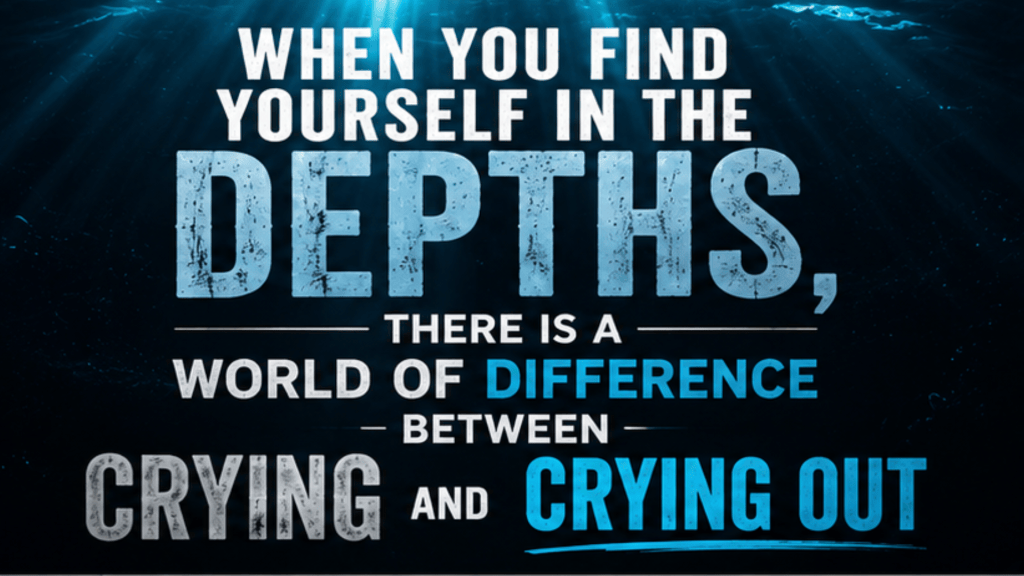
Sometimes our difficulties are a result of our own poor choices, and sometimes they are outside of our control. Regardless of the source, we can always choose to respond by crying about them or by crying out for help with them.
The hard times in life are not what define you. Your response to the hard times in life is what defines you.
Complaining is like mold to the soul. The more you hold on to your gripes, the more infectious and widespread they become. Eventually, they take over and destroy your life.
If you never pause and wait for God to work things out, you’ll never experience His deliverance. If you never experience His deliverance, your faith in Him will never grow. If your faith in Him never grows, you’ll have a hard time pausing and waiting for Him to work things out. You have to give up control at some point; it launches the cycle of trust, faith, and growth.
“The depth is simply the height inverted, as sin is the index of moral grandeur. The cry is not only truly human, but divine as well. God is deeper than the deepest depth in man. He is holier than our deepest sin is deep. There is no depth so deep to us as when God reveals his holiness in dealing with our sin…. [And so] think more of the depth of God than the depth of your cry. The worst thing that can happen to a man is to have no God to cry to out of the depth.” (Eugene Peterson)
To fear God is not to hide from God. Rather, it is to know Him, to love Him, to Revere Him, to worship Him, and to serve Him. However, until our sin is forgiven, we can only hide from Him.
Every world religion seeks to assuage guilt and shame by working harder and doing more. If you don’t measure up, their rules simply teach you to work harder and do more. Yet, we know that this is an impossible exercise. We can never do enough or work hard enough to overcome the far-reaching harm of our sin. We need forgiveness, and we cannot earn or provide that for ourselves.
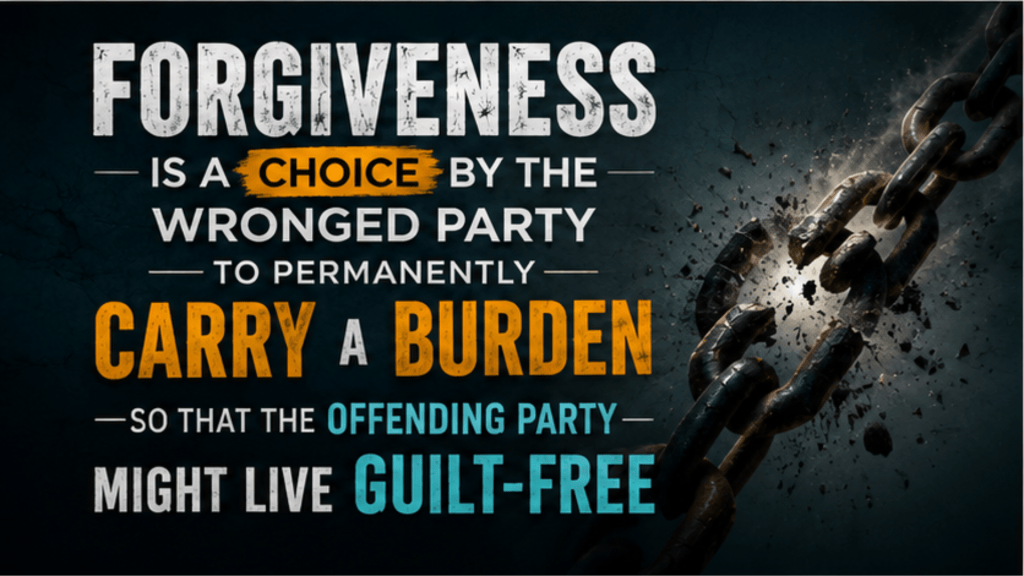
God (in Christ) IS forgiveness. Just as Jesus is the personification of God’s love, He is also the personification of God’s forgiveness. He willingly bears the guilt-burden of our sin so that we can live freely, both now and eternally with Him.
When I find myself in the depths of life, I can remind myself that God’s steadfast love means He is with me in the struggle. His plentiful redemption means that He has and is working on my behalf. His forgiveness means I can be confident of a future with Him.
If my hope is in myself, I will be disappointed. If my hope is in my friends and family, I will be disappointed. If my hope is in politicians or government, I will be disappointed. If my hope is in role models or influencers, I will be disappointed. If my hope is in Jesus, I will be content.
EVEN AT THIS LATE HOUR
Joel, the prophet, called on the nation of Israel to repent.
Chapter two of his writings paints a frightening picture of the impending doom his countrymen faced. He predicted the advance of a powerful attacking army such as had never been seen before. He described those days as dark, cloudy, and gloomy.
But he also reminded Israel that their God was still able to save them.
“Even at this late hour,” Joel said, “when things look so bad, our God can still save the day.”
He reminded his friends that God is gracious, merciful, slow to anger, abounding in steadfast love, and One who relents from punishing.
“Even though we don’t deserve it,” Joel preached, “God still may rescue us!”
Joel called the nation to repent.
A Call to Repentance
Old people, young people—even babies—were to gather and cry out for salvation.
This was not a time for celebration. Joel told bridegrooms and brides to leave their ceremony and join the congregation in a nationwide appeal to God.
“Spare your people, O LORD. Do not let your reputation be mocked. Do not let people say, ‘Where is their God?’”
A Prayer for Today
The prayer Joel prescribed for Israel can also be prayed by you.
You may not face an advancing horde of Assyrians, a plague of locusts, or a devastating famine. You may, however, find yourself in dark days, living under a cloud of gloom.
Perhaps it is time for you to turn back to God, your Father, and allow Him to step in and save you.
Use the prayer of Israel as a template for your own repentance.
A Truly Repentant Prayer Is About God’s Glory
Recognize that your sin besmirches God’s reputation.
Look into your heart to discover genuine and authentic pain for the negative publicity you have brought to God’s name.
Recognize that your salvation enhances God’s reputation.
Let your repentance be a promissory note to repay God’s mercy and grace with your own public worship and witness.
Joel’s appeal remains just as relevant today as it was when he first proclaimed it:
“Rend your hearts and not your clothing. Return to the LORD, your God, for He is gracious and merciful, slow to anger, and abounding in steadfast love, and relents from punishing.”(Joel 2:13)
Click on the image to download the DiscipleQuest PDF
The DiscipleQuest PDF includes 7 days of verse study prompts. You can use these seven studies to dig deeper into what the Bible teaches about waiting with hope:
Lamentations 3:25-26
Isaiah 30:18
Romans 8:24-25
James 5:7-8
Galatians 6:9
Psalm 33:18-22
Titus 2:11-13
Use these questions as journal prompts or as conversation starters with a group of friends or a Bible study group:
Do you have any good “restoration stories”? (cars, houses, relationships, etc.)
What types of emotions result when a broken relationship is restored? Why is it often so difficult to restore a broken relationship?
What kinds of things (words, thoughts, actions, etc.) cause our relationship with God to be broken? How do we restore our relationship with God?
Read Psalm 51:1-6. Which of these verses make the biggest impression on you? Why?
What character traits does David use to describe God in these verses? How does David speak of himself in these verses? Do your feelings about yourself ever seem similar to David’s?
Read Psalm 51:7-12. What does David want God to do for him?
In verse 12, David talks about the “joy of salvation”. Have you ever experienced the joy of salvation? How would you describe it?
Have you ever had a time when you felt that God “restored” your relationship with Him? How did you respond?
Read Psalm 51:13-19. Verses 13-15 talk about how we respond after God forgives us. Do you think most Christians spend enough time telling others what God has done for them? Why or why not?
When God forgives our sins, what should we tell others about that experience? In your own words, how would you describe God’s forgiveness?
What is your one key take-home thought after reading this Psalm?
1 Blessed is everyone who fears the LORD, who walks in his ways! 2 You shall eat the fruit of the labor of your hands; you shall be blessed, and it shall be well with you. 3 Your wife will be like a fruitful vine within your house; your children will be like olive shoots around your table. 4 Behold, thus shall the man be blessed who fears the LORD. 5 The LORD bless you from Zion! May you see the prosperity of Jerusalem all the days of your life! 6 May you see your children’s children! Peace be upon Israel!
10 POINTS TO PONDER
The better life begins in your heart, becomes externalized in your actions, slowly spreads to those closest to you, and ultimately impacts anyone in your circles of influence.
The first biblical example of fearing the LORD happened in Genesis 3 when Adam and Eve hid from God. They were afraid because of feelings of guilt and inadequacy. This is NOT the proper example. Our fear of the LORD is not terror, but is rather honor, respect, admiration, and submission.
When God is the first priority of my heart, my life will be characterized by obedience to Him and imitation of Him.
The “blessed life” is not a cliché meaning we get everything we desire; rather, it is an inversion of what our sinful soul pursues, and it is a recalibration of what we hope for in life.
When you fear the LORD and walk in His ways, you will experience the rolling back of sins curse. What was once a difficulty will become a joy. What once caused dread will now be anticipated.
When a husband cultivates his relationship with his wife by being attentive, consistent, tender, and patient, she will bring joy and fruitfulness to their home.
We may not see the benefit of our parenting for years. Some children take a long time to mature. However, the more intentional we are in their younger years, the more likely it is that they will bring us great joy in our older years.
Nations are blessed when their cities are blessed. Cities are blessed when their families are blessed. Families are blessed when their parents walk with God.
No one has ever fully feared the LORD or completely walked in His ways. That’s why we’ve never really experienced the blessings described in this Psalm. This is why we need Jesus!
You can either have Jesus or prosperity. Or you can have Jesus’ version of prosperity, which is death.
ONE DAY, AMERICA WILL FALL
Jeremiah wrote from a place of unimaginable despair. The world he knew had come to an end. His grief and agony bleed across every page of Lamentations. The glorious city of Jerusalem lay in ruins, and from Jeremiah’s perspective there seemed to be no hope of rebuilding or restoration.
Yet there is hope.
Jerusalem was not the first great city to fall, and it would not be the last. History is filled with the ruins of kingdoms that once seemed invincible. Today we can walk through the remains of the Mayans, the Incas, the Romans, the Persians, and countless others. Every empire eventually crumbles. No earthly kingdom lasts forever.
That may not sound hopeful at first, but it is.
America is still a young nation. At 250 years old, it has existed for only a fraction of the time that Israel or Judah endured. Yet one day Washington will fall. New York will fade. Los Angeles will become another chapter in history. It may not happen in our lifetime, but it will happen. Someday someone could write these same words over our nation:
“How lonely sits the city that was full of people! How like a widow has she become, she who was great among the nations!”
Do you see the hope now?
The same principle applies to every one of us. You may live seventy or eighty years if God grants it. Then your life on earth will end. Your accomplishments will be forgotten. Your possessions will decay. Your reputation will fade. Everything you build in this world will eventually crumble.
Yet there is hope.
Peter reminds us that those who belong to Christ “have been born again to a living hope… to an inheritance that is imperishable, undefiled, and unfading, kept in heaven for you” (1 Peter 1:3–4).
If your hope is in yourself, you will eventually be disappointed.
If your hope is in your abilities, your achievements, or your wealth, they will fail you.
If your hope is in your country, it will one day disappoint you.
If your hope is in a politician, a pastor, a leader, or a celebrity, they will eventually let you down.
Everything ends.
Except the kingdom of God.
So place your hope where it can never be shaken. Invest your time, your talent, and your treasure in the kingdom that will never fall. Live for what lasts forever.
Click on the image to download the DiscipleQuest PDF
The DiscipleQuest PDF includes 7 days of verse study prompts. You can use these seven studies to dig deeper into what the Bible teaches about fearing the Lord:
Proverbs 1:7
Deuteronomy 10:12
Proverbs 8:13
2 Corinthians 7:1
Psalm 34:9
Proverbs 15:16
Ecclesiastes 12:13
Use these questions as journal prompts or as conversation starters with a group of friends or a Bible study group:
Discussion Questions – Matthew 6:19–34
Who in your life needs to be reminded that God is faithful? How can you encourage them this week?
What are some of your favorite keepsakes? Why are they so meaningful to you? How would you feel if you lost them?
Why is it so difficult to let go of the things we love?
Read Matthew 6:19–34. Which two or three sentences stand out to you the most? Why do they resonate with you?
Jesus talks about storing up treasure in two different places. What are those two places, and what makes them so different?
Do you know someone who has lost an earthly treasure—a possession, investment, or accomplishment that meant a great deal to them? What happened, and what did you learn from their experience?
In verses 25–32, Jesus tells His followers not to be anxious. What specific things does He mention? Why do you think people worry so much about them?
Jesus commands us to “seek first the kingdom of God.” What do you think that means? What would it look like for someone to live as though God is truly their King?
Jesus also tells us to seek God’s righteousness. What do you think that looks like in everyday life?
God has entrusted each of us with different treasures—our time, abilities, relationships, opportunities, finances, and influence. Which treasures has He entrusted to you? How do you think He wants you to invest them?
What causes you the most anxiety? What are you most afraid of losing? How do verses 27–30 speak into those fears?
Is there anything God may be asking you to let go of? Is there something He is calling you to pursue more intentionally?
What is one practical way you can remind yourself of God’s faithful provision this week?
1 Unless the LORD builds the house, those who build it labor in vain. Unless the LORD watches over the city, the watchman stays awake in vain. 2 It is in vain that you rise up early and go late to rest, eating the bread of anxious toil; for he gives to his beloved sleep. 3 Behold, children are a heritage from the LORD, the fruit of the womb a reward. 4 Like arrows in the hand of a warrior are the children of one’s youth. 5 Blessed is the man who fills his quiver with them! He shall not be put to shame when he speaks with his enemies in the gate.
TEN POINTS TO PONDER
Nothing that really matters in life can be successfully accomplished without God.
Even the mundane things of life can become marvelous when they are done for the glory of God.
A full life without God will be eternally empty.
The temple was a reminder that building can be successful when God is in it, and the walls of Jerusalem were a reminder that safety is possible when God is in it.
If all of your hard work leaves you anxious and without sleep, is it really worth it?
Peace is a great gift from God. One can be at peace, even if unfomfortable or unsafe. One can be at peace, even if unsuccessful in the eyes of the world. Peace is from God, not something we achieve for ourselves.
We like to think that we can build a great life for ourselves, but the greatest gifts of all are the ones that are given to us by God (namely, salvation and children).
An arrow that is not intentionally aimed will never hit its target. In the same way, a child that is not intentionally aimed will never become what the parents hope.
When parents don’t let go, children don’t reach their potential. From the moment your child is born, your job is to get them ready to leave.
Solomon, the author of this Psalm, built the LORD’s house, but sadly did not build his own house on the LORD. It is possible to be so busy doing ministry that we neglect the more important responsibility of family.
5 SIMPLE TRICKS TO BE A SUPER-STAR PARENT
Every parent wants to become a better parent. One of the greatest opportunities we have is learning how to communicate well when our children need correction.
The truth is, learning to receive correction is one of the defining characteristics of a wise person. If our children can grow into adults who accept correction with humility instead of resisting it with pride, they will avoid countless heartaches. The way we correct them today will shape the way they respond to correction for the rest of their lives.
I recently came across the following principles in an article about parenting. While the article was written primarily to fathers, the wisdom applies to every parent.
The next time you need to correct your child, keep these five reminders in mind:
1. Don’t waste words.
Resist the urge to over-explain, over-apologize, or lecture. Calm, confident, and concise correction is usually far more effective than a lengthy speech.
2. Don’t threaten.
Empty threats only weaken your credibility. Say what you mean, and follow through consistently.
3. Be clear about expectations.
Don’t assume your child knows exactly what you expect. Make your expectations simple, specific, and unmistakably clear.
4. Be clear about consequences.
Especially in areas where your child has struggled before, they should know in advance what will happen if they choose to disobey. Surprises rarely produce growth; consistency often does.
5. Take decisive action.
When correction is needed, don’t delay or hesitate. Loving, measured, and consistent action communicates security and builds trust.
None of us gets this right every time.
Just as our children need grace, so do we. There will be moments when we overreact, underreact, or simply handle things poorly. When that happens, don’t pretend it didn’t happen. Humbly admit your mistake, ask for forgiveness when appropriate, learn from it, and move forward.
Perfect parents don’t exist. But humble, growing parents are exactly what our children need.
Click on the image to download the DiscipleQuest PDF
The DiscipleQuest PDF includes 7 days of verse study prompts. You can use these seven studies to dig deeper into what the Bible teaches about building a life with or without God:
Proverbs 14:12
Matthew 7:24-27
Colossians 2:6-7
1 Corinthians 3:11
Mark 8:36
Jeremiah 17:5
Ecclesiaster 2:11
Use these questions as journal prompts or as conversation starters with a group of friends or a Bible study group:
What is something you have built that you are proud of?
What is something you protect? that you work hard to keep from losing?
Read Psalm 127:1-2. Have several people rephrase these verses in their own words.
Other than houses, what are things people build in their lives?
If someone observed the way you spend your money, time, and energy, what would they assume you were building with your life?
What do you think it means to build with God or to build without God?
What do you think God wants you to build with your money, time, and energy?
Why is safety such a high value for many people? What does this Psalm say about safety (v1)?
How does your need or desire for safety work together with your trust in God?
What is the difference between having a healthy ambition and turning success or advancement into an idol?
Hard work is not bad, but when can hard work become a bad thing?
When you work hard, are you usually working for God’s glory or for your own security, comfort, or recognition?
How can you invite God into your work this week?
What will it look like for you this week to depend more upon God?
Rejoice in the Lord always; again I will say, rejoice. Let your reasonableness be known to everyone. The Lord is at hand; do not be anxious about anything, but in everything by prayer and supplication with thanksgiving let your requests be made known to God. And the peace of God, which surpasses all understanding, will guard your hearts and your minds in Christ Jesus.
TEN POINTS TO PONDER
We should never forget that Paul is writing these words from prison. When he uses words like “anything” and “everything” those include the times when you find yourself in prison because you’ve been falsely accused.
To “rejoice” is to “activate joy”. It is an action word that is rooted in state of being. It is the intentional act of bringing joy to the surface by externally declaring and demonstrating the internal reasons we have for happiness.
We are not to rejoice in our circumstances, because circumstances change. We rejoice in the Lord, because He never changes.
Tie this passage back to the previous verses. One of the reasons Euodia and Synctyche were feuding was that they lacked joy. It is impossible to be angry at another believer if you are filled with joy from the Lord.
“The Lord is at hand” can be understood several different ways, but what is undeniable is that it points to God’s proximity and His control. He knows what is happening and what is next, and He is near to us in and through it all.
If we truly believe that the Lord is at hand, the only reasonable response is to relax and rejoice in Him.
When we bathe our prayer in thanksgiving, we receive a greater benefit. We are reminded of God’s past provision and protection and we grow more confident in the trustworthiness of his promises.
Is there anything you can do about this? If so, do it and stop worrying. If not, don’t worry about it; pray.
Those who seek peace through understanding will never find it. Those who find peace without understanding will easily hold on to it.
You cannot find a good reason to be anxious unless you leave God out of the equation.
YOU DON’T HAVE TO LIVE ON ANXIETY ISLAND
Everyone experiences stress and anxiety, but no one has to live there.
Anxiety Island is a lonely place. It’s where we begin to believe the lie that no one could possibly understand what we’re going through. But Jesus understands. He has been there. Because He suffered in every way we do, yet without sin, we can look to Him to find the way out of anxiety and into God’s peace.
On the night Jesus had every reason to be overwhelmed by anxiety, He prayed.
Prayer is the alternative to anxiety.
Philippians 4:6-7 says:
“Do not be anxious about anything, but in everything by prayer and supplication with thanksgiving let your requests be made known to God. And the peace of God, which surpasses all understanding, will guard your hearts and your minds in Christ Jesus.”
When we turn our burdens over to God, we can rest in His peace instead of rolling around in our panic.
In the previous verses, Paul encourages believers to rejoice always. The absence of rejoicing creates a void that anxiety loves to fill. That’s why Paul continues by reminding us that thanksgiving should accompany every prayer.
Thanksgiving is the antidote to anxiety.
When my heart is full of gratitude for God’s goodness, faithfulness, and provision, there is less room for anxiety to take root.
This passage is ultimately about the power of prayer, not the size of our problems. We bring our needs to God because we are confident in His character and provision. That confidence grows through a lifestyle of thanksgiving.
Notice that Paul does not promise we’ll receive everything we ask for. He does promise peace. Peace comes when we release our requests into God’s hands and trust Him with the outcome.
Trust is the antidote to anxiety.
In the Garden of Gethsemane, Jesus asked His Father if there was another way. There wasn’t. Yet even though His request was not granted, He was so filled with peace that He endured His trial with faith, courage, patience, and even forgiveness. He trusted His Father to do what was right.
Don’t stay stuck on Anxiety Island.
Fill your life with gratitude for what God has done, what He is doing, and what He will do. Find reasons to rejoice in every circumstance. Present your requests to your Father—and leave them there.
Be confident that He will meet your needs, work all things together for your good, and always do what is right.
Click on the image to download the DiscipleQuest PDF
The DiscipleQuest PDF includes 7 days of verse study prompts. You can use these seven studies to dig deeper into what the Bible teaches about being at peace:
Matthew 6:25-34
1 Peter 5:7
Isaiah 26:3
Psalm 46:1-3
Isaiah 43:1-2
John 14:27
Psalm 55:12
Use these questions as journal prompts or as conversation starters with a group of friends or a Bible study group:
Describe the most comfortable place in your house?
Talk about a time in your life when you have felt a “deep” peace.
How do you think comfort and peace are related?
What are the situations in life that steal people’s peace?
Read Psalm 23.
Have a few people talk about their experiences walking (or watching someone walk) through the “valley of the shadow of death.”
Verse four refers to fearing evil. What evil things do people often fear?
How do death, evil, and fear steal our peace?
What other life experiences make us uncomfortable? How does being uncomfortable often steal our peace?
What phrases in Psalm 23 are comforting phrases?
The last phrase of the Psalm is “I shall dwell in the house of the LORD forever.”
How should knowledge of future comfort help us deal with the current discomforts of life?
Verse one of the psalm says, “The LORD is my shepherd, I shall not want.” How does contentment bring peace?
What aspects of your life are currently stealing your peace? How would the good shepherd tell you to deal with these?
PHILIPPIANS: Line by Line
Philippians 4:4-7: Rejoice in Everything
4a. Rejoice in the Lord always.
Paul writes these words from prison. He is not speaking theoretically. He is proving that joy is possible even when life is difficult. The secret is not changing our circumstances. The secret is fixing our attention on Jesus.
4B. Again, I will say, rejoice.
This is the theme of the entire letter. Paul repeats it so his friends won’t forget. Joy is not found in circumstances, comfort, success, or approval. Those things come and go, but joy is found in the Lord. If our joy depends on circumstances, it will disappear whenever life becomes difficult. If our joy depends on Jesus, it will always be available.
5a. Let your reasonableness be known to everyone.
Christians should be the most observably reasonable people around. Some people can always find a reason to be unhappy. Some people can always find a reason to be happy. Christians should always be the latter. If you are in Christ, and you’re not becoming a more joyful person, it’s either because you’re quenching the Spirit or because you aren’t really in Christ.
5b. The Lord is at hand.
(i) The Lord is at hand because He is present with us. He has not abandoned us. He knows everything that is happening, and He is in control of everything that is happening.
(ii) The Lord is at hand because He is returning soon. History is moving toward a conclusion. Every injustice will be addressed. Every wrong will be made right.
Because Jesus is near (remember Psalm 23), we do not need to panic. Because Jesus is coming, we do not need to worry.
6a. Do not be anxious about anything,
Anxiety is a burden God never intended us to bear. Nothing in life is a good reason to be anxious, but because we sometimes lose sight of God, anxiety can often creep in. This is not a suggestion that bad things and hard things don’t happen, but rather it is Paul’s core belief that bad things and hard things will not cause us anxiety if we deal with them the right way.
6b. But in everything…
“Everything” is a different way to say “anything.” This teaching from Paul is all-inclusive; there are no exceptions.
6c. by prayer and supplication with thanksgiving, let your requests be made known to God.
Prayer is an antidote to anxiety. When we pray with thanksgiving, we leverage what God has always done to embolden us in our belief that He will do it again. He wants us to ask Him for whatever we want, and He wants us to do so with a heart that recognizes and embraces His ability to provide whatever we need.
7a. And the peace of God, which surpasses all understanding,
Anxiety grows when we focus on what we don’t know. We worry about what might happen, what people might do, what others might think, etc. Peace happens when we focus on what God knows (even if we don’t know it). Our confidence in His control allows us to live with peace, no matter what is happening.
7b. will guard your hearts and minds in Christ Jesus.
When we let our emotions run wild, we become anxious. When we let our minds run wild, we become anxious. When we let Jesus run our minds and emotions, we find peace.
12 Not that I have already obtained this or am already perfect, but I press on to make it my own, because Christ Jesus has made me his own. 13 Brothers, I do not consider that I have made it my own. But one thing I do: forgetting what lies behind and straining forward to what lies ahead, 14 I press on toward the goal for the prize of the upward call of God in Christ Jesus. 15 Let those of us who are mature think this way, and if in anything you think otherwise, God will reveal that also to you. 16 Only let us hold true to what we have attained. 17 Brothers, join in imitating me, and keep your eyes on those who walk according to the example you have in us. 18 For many, of whom I have often told you and now tell you even with tears, walk as enemies of the cross of Christ. 19 Their end is destruction, their god is their belly, and they glory in their shame, with minds set on earthly things. 20 But our citizenship is in heaven, and from it we await a Savior, the Lord Jesus Christ, 21 who will transform our lowly body to be like his glorious body, by the power that enables him even to subject all things to himself. 1 Therefore, my brothers, whom I love and long for, my joy and crown, stand firm thus in the Lord, my beloved.
TEN POINTS TO PONDER
Pay attention to the strength of the action words/phrases in these verses: “press on”, “straining forward”, “hold true”, “stand firm”.
The previous verses make it clear that nothing we do can earn salvation. These verses make it clear that if we do nothing, we will not experience the abundant life made possible by salvation.
The Christian life is progressive. Day by day and step by step, we grow to be more like Christ. None of us has obtained it, and none of us is perfect, but we all keep pressing on.
The ultimate goal is to be found in Christ on the day we are called up to be with God.
In verse 15, Paul mentions that maturity is reflected in and developed by how we think. If we want to be spiritually mature, we must pay attention to our thought life and our mindset.
Christian maturity happens when we surround ourselves with mature believers and when we watch and imitate mature believers. You will become like the people with whom you spend the most amount of time.
The pattern of the world is to live by passions, live with urgency, and live for acceptance. The pattern of the kingdom is to live by God’s power, live with patience, and live for the glory of God. (v.19-21)
You are the only person who can decide whether to live as a citizen of this world or as a citizen of the next world. How you invest your time, talents, and treasures is the greatest indicator of how you’ve made that choice.
Because we know that one day Jesus will transform us and glorify our bodies, we should live today to glorify Him.
To “stand firm” in the Lord means to have your feet firmly planted in the person of Jesus. If you never think of Him, never commune with Him, never speak to Him, and never listen to Him… your feet are not planted in Him!
5 DAILY ACTIVITIES TO FIRMLY PLANT YOURSELF IN CHRIST
In the parable of the sower, Jesus taught that some people fail in their faith because they lack spiritual depth. When the trials of the world hit (and they always do), these people wither and die. Standing firm requires us to put down deep spiritual roots. Below are three Bible passages that talk about putting down spiritual roots and five principles I’ve drawn from these passages (you’ll notice how they each tie back to Philippians 3):
Passage 1: Psalm 1:1-3
Psalm 1:1-3 Blessed is the one who does not walk in step with the wicked or stand in the way that sinners take or sit in the company of mockers, but whose delight is in the law of the Lord, and who meditates on his law day and night. That person is like a tree planted by streams of water, which yields its fruit in season and whose leaf does not wither— whatever they do prospers.
Limit your time with people whose influence is spiritually shallow (Psalm 1)
The people with whom you spend time will influence you to become like them. To be sure, you can influence them as well, but if you are not intentional about the nature of your relationship, you will become like them more quickly than they become like you.
I often think of a ladder when I read this passage. Imagine two people on the same ladder, one desires to pull the other up, and the other is working to pull their partner down. Gravity sides with the low man on the ladder. He will have a much easier time pulling the other down. Our natural tendency toward sin and selfishness causes us to get pulled down much more quickly than we pull others up.
Psalm 1 warns against spending too much time with those who live in opposition to God. They influence you toward spiritual shallowness. Implied in this Psalm is the need to surround yourself with those who will produce spiritual depth in your life. Allow yourself to be influenced by those who will ask tough questions, hold you accountable, and encourage you toward faithfulness.
Immerse yourself in God’s Word (Psalm 1)
Psalm 1 also declares that the person who delights and meditates in God’s Word will be blessed. The Bible is God’s revelation of Himself to us. Everything we need to know about Him and everything we need to know about living a righteous life is included in its pages. Spiritual depth is the result of time spent with God’s Word.
Meditating on God’s Word indicates more than simply reading a passage, setting it down, and getting on with your day. Meditating means you take God’s truth with you throughout the day. You may not be able to memorize an entire chapter and recite it to yourself all day long, but you can identify a principle and repeatedly come back to it during the day. Perhaps you can write it down or email it to yourself. Maybe you can set an alarm on your phone reminding you to take a couple of minutes to review what you discovered. Most importantly, seek opportunities to apply God’s Word to your daily situations. As you do this, you’ll discover a new depth to your spiritual life.
Passage 2: Colossians 2:6-7
Colossians 2:6-7 — So then, just as you received Christ Jesus as Lord, continue to live your lives in him, rooted and built up in him, strengthened in the faith as you were taught, and overflowing with thankfulness.
Continually demonstrate gratitude to God (Col 2:7)
In Colossians 2, Paul is encouraging a group of Christians to live consistently with their roots in Jesus’ example and teaching. This is accomplished, according to Paul, by “overflowing with thankfulness.” Saying, “thank you” every so often is nice, but a quick prayer of thanksgiving once a day is hardly “overflowing.”
Causing anything to overflow requires filling it with more than it can handle. If you want to overflow with thanksgiving, you must FILL your life with more gratitude than you can handle. That means being thankful even when you don’t feel like it.
Begin your day by giving thanks (you can start by thanking God that He woke you up). At various points throughout the day (meals), give thanks. At the conclusion of your day, give thanks. When things go well, give thanks. When others treat you with kindness, give thanks. When things go poorly, give thanks that they aren’t worse. When others treat you with malice, give thanks that you are being treated like Jesus was. You can always find something for which to be grateful. The more you thank God, the more you’ll be rooted in His Son.
Fill your mind with Biblical teaching (Col 2:7)
This may seem similar to an earlier idea, but an important distinction should be noticed. Psalm 1 focused on what you do on your own. Do you long to study God’s Word? Do you carry it with you? Colossians 2 is focused on what you do with others. The keyword in this phrase is “taught”. You should regularly place yourself in relationships with those who can teach you God’s Word.
You can learn from pastors, small group leaders, authors, podcasts, YouTube, blogs, friends, family members, and even your children. The key is getting into places where you will hear the truth, submitting yourself to listen to the truth, and opening yourself to be changed by the truth. It’s no secret that God’s plan for us includes relationships with others. He created us to be shaped by our relationships. Allow yourself to be impacted by those around you so that you can develop a new level of spiritual depth.
Passage 3: Ephesians 3:16-18
Ephesians 3:16-18 — I pray that out of his glorious riches he may strengthen you with power through his Spirit in your inner being, so that Christ may dwell in your hearts through faith. And I pray that you, being rooted and established in love, may have power, together with all the Lord’s holy people, to grasp how wide and long and high and deep is the love of Christ,
Choose love (Eph 3:17)
Concentrate on how much Jesus loves you. Paul wrote in Ephesians that God’s love is wide, long, high, and deep. In other words, it’s way bigger than you can imagine. Think about that. The God of the universe loves you more intensely than you could ever love yourself. How do you want to respond to that love?
These verses say that we are rooted and established in love because we have Christ dwelling in our hearts. The more time you spend contemplating Christ’s love for you, the more that love will spill out of you and into the lives of all those around you. More importantly, the more you think about Jesus’ love for you, the more you will discover your love for Him.
At the end of the day, you cannot stand firm if your life is not rooted in Christ. The deeper your roots go, the more you will love and be loved by your Creator, Savior, Redeemer, and Lord.
Click on the image to download the DiscipleQuest PDF
The DiscipleQuest PDF includes 7 days of verse study prompts. You can use these seven studies to dig deeper into what the Bible teaches about being rooted:
Colossians 2:6-7
Psalm 1:2-3
Ephesians 3:17
Psalm 92:12-14
1 Corinthians 15:58
John 15:4-7
Matthew 7:24-25
Use these questions as journal prompts or as conversation starters with a group of friends or a Bible study group:
Read Philippians 4:1. What do you think it means to “stand firm” in the Lord?
Two obstacles exist for anyone who attempts to “stand firm”. The first is the ground on which they plant their feet, and the second is the forces that seek to dislodge them.
What are three steps a person can take to build their life on a foundation that allows them to stand for Jesus?
Make a list of five challenges people face that might dislodge them or cause them to stumble in their faith. What is the greatest challenge you face?
Read Matthew 7:24-27 and 1 Corinthians 3:11-13. What do these verses teach about the foundation of our life?
If Jesus is the foundation of your life, how should that impact what you think? How should it impact what you say? How should it impact the way you treat and talk about others?
Healthy trees can withstand a storm because they have put down strong roots. The Bible uses this as a picture describing how we can stand firm in the storms of life.
Read Psalm 1:1-3, John 15:5, and Galatians 5:22-23. What do these verses teach about roots, branches, and fruit?
What do you think it means to be “rooted in Him”?
If you allow Jesus to be the primary source of authority in your life, what kind of fruit should your life be bearing?
What do you think it means to be “built up in Him”?
Which of these areas is most challenging for you?
Walking Jesus’ path?
Being rooted in Jesus?
Allowing Jesus to be your foundation?
What is your next step?
How can this group pray for you?
PHILIPPIANS: Line by Line
3:12-4:1 Stand Firm
12a. Not that I have already obtained this or am already perfect,
Paul had not yet arrived at the end where he would receive his final reward, and his life was not yet free from sin. His statement here is a helpful reminder for every Christian. We will never fully arrive until we step from this life into the next life. Until then, perfection can be the pursuit, but it will never be gained. Therefore, we must give grace to ourselves, and we must give grace to others.
12b. But I press on to make it my own,
Rather than being discouraged by his shortcomings, Paul kept his focus on the prize. The evil one loves to throw obstacles in our way, and he loves to distract us. We defeat him by pressing on.
12c. Because Christ Jesus has made me his own.
Jesus has already done the work. He’s won the war. He’s secured the victory. We only need to stay faithful to the end. Once you belong to Jesus, He will never let you go.
13a. Brothers, I do not consider that I have made it my own.
Again, Paul makes it clear that he doesn’t think that he has arrived. It’s as if he’s saying, “All this stuff I’m teaching you is also stuff I’m working on.”
13b. But one thing I do: forgetting what lies behind and straining forward to what lies ahead,
Paul is responding to two truths. First, he has not arrived. Second, Jesus has done for him what he could not do for himself. Therefore, he is going to take action. The proper response to Jesus’ work is never passivity. His response entails two steps. First, he lets go of the past (his past failures, sins, mistakes, hurts, etc.). Second, he pushes forward. The hope of eternal life and the promise of abundant life drive Paul to move forward rather than live in the past.
14. I press on toward the goal for the prize of the upward call of God in Christ Jesus.
Paul’s focus is narrow and precise. All that matters is moving forward toward the ultimate goal. Because eternal life is the ultimate prize (the upward call), everything in Paul’s life is evaluated based on its eternal value. If it doesn’t carry an eternal benefit, it’s not part of the goal; it’s not part of the prize.
15a. Let those of us who are mature think this way,
This is another place in his letter where Paul circles back to our thinking process. Here, he points out that maturity is impacted and revealed by how we think. The mature person thinks more about eternity (the future) than they do about the past. We can reasonably infer from this statement that Paul considers our thought process and mindset to be critically important in our development as Christians.
15b. And if you think otherwise, God will reveal that also to you.
Paul encourages those who are not yet spiritually mature that God is still working on them (as he promised in chapter 1). As God completes His work in their life, their thinking will change. As they submit themselves to Him, He will make it easier for them to have an eternity-focused mindset.
16. Only let us hold true to what we have attained.
Don’t go backward! If you came to Christ because eternity mattered to you, don’t go back to thinking like the world.
17. Brothers, join in imitating me, and keep your eyes on those who walk according to the example you have in us.
In this new paragraph, Paul is teaching the Philippians how to maintain a mature mindset. Critically, they must surround themselves with and submit themselves to people who are further along in the journey. He wants them to find people who have a more mature mindset and then imitate them. It has been said that we all become like the people with whom we spend the most time. If you are constantly around people who have an eternity-first mindset, you’ll find that mindset growing in you as well.
18. For many of whom I have often told you and now tell you, even with tears, walk as enemies of the cross of Christ.
Paul had people in his life who weren’t following Jesus. Some of them were people who never had, and some were people who once had and now had strayed. The Philippians knew this was true and had even seen it in their own church and relationships. This still happens 2000 years later. We should not be surprised; Jesus told us this would happen (in the parable of the sower). Our response should not be despair, but rather prayer. And we should beware lest we walk the same path.
19a. Their end is destruction,
One of two endings awaits everyone. We will either face destruction or life. Those who choose to walk apart from Christ will spend eternity separate from Him, experiencing eternal destruction.
19b. Their god is their belly,
The way of the world is to satisfy every craving as quickly and as often as possible. Nothing matters beyond the present moment. No thought is given to consequences or outcomes. Everything is urgent.
19c. They glory in their shame, with minds set on earthly things.
Words, attitudes, and actions that should bring shame are actually celebrated. Paul described this phenomenon in Romans 1:32 – “Though they know God’s righteous decree that those who practice such things deserve to die, they not only do them but give approval to those who practice them.”
20a. But our citizenship is in heaven,
We all must choose which kingdom we serve, either the kingdom of this world or the kingdom of heaven. Those who are citizens of heaven do not worry about nor seek to accumulate the treasures and approval of the world.
20b. And from it we await a Savior, the Lord Jesus Christ,
Our King is Jesus. We are waiting for Him to come from Heaven to complete our salvation. Today, everyone who has accepted Christ’s death and resurrection as their own has received salvation from the penalty of sin (death). Because they’ve been given the Holy Spirit, they are gradually discovering salvation from the power of sin. Paul described this in verses 12-13. One day, we will all be saved from the presence of sin. At that time, we will completely obtain the resurrection, and we will be made perfect (complete).
21a. Who will transform our lowly body to be like his glorious body,
Our ultimate salvation is comprehensive. Our current bodies, wrecked by sin’s consequences and impact, will be replaced with resurrection bodies, untouchable by sin and evil.
21b. By the power that enables him even to subject all things to himself.
We can have complete confidence that Jesus will accomplish all of this because He has power over everything. The one who conquered death can conquer and control anything.
4:1a. Therefore, my brothers, whom I love and long for, my joy and crown,
The Philippians were special to Paul. They were an exemplary church. Yet, like Paul, they were not perfect, and they were not complete. They needed encouragement to continue pressing forward.
4:1b. Stand firm thus in the Lord, my beloved.
To stand firm is to plant your feet and not be moved. Do not be moved by the world’s standards (vs. 19). Do not be moved by an obsession with the past (vs. 13). Do not be moved by your own shortcomings and failures (vs. 12). Plant your feet on the finished work of Jesus and do not move or compromise until He returns.
1 Finally, my brothers, rejoice in the Lord. To write the same things to you is no trouble to me and is safe for you. 2 Look out for the dogs, look out for the evildoers, look out for those who mutilate the flesh. 3 For we are the circumcision, who worship by the Spirit of God and glory in Christ Jesus and put no confidence in the flesh— 4 though I myself have reason for confidence in the flesh also. If anyone else thinks he has reason for confidence in the flesh, I have more: 5 circumcised on the eighth day, of the people of Israel, of the tribe of Benjamin, a Hebrew of Hebrews; as to the law, a Pharisee; 6 as to zeal, a persecutor of the church; as to righteousness under the law, blameless. 7 But whatever gain I had, I counted as loss for the sake of Christ. 8 Indeed, I count everything as loss because of the surpassing worth of knowing Christ Jesus my Lord. For his sake I have suffered the loss of all things and count them as rubbish, in order that I may gain Christ 9 and be found in him, not having a righteousness of my own that comes from the law, but that which comes through faith in Christ, the righteousness from God that depends on faith— 10 that I may know him and the power of his resurrection, and may share his sufferings, becoming like him in his death, 11 that by any means possible I may attain the resurrection from the dead.
TEN POINTS TO PONDER
Lasting joy comes from the Lord. Joy that flows from anything else will not last.
Legalism is the prideful fruit of constant comparison. Legalism is the creation of standards I can use to congratulate myself while condemning others.
The more rules you live by, and the more rules you hold others to, the more likely it is that you are depending on your own strength rather than Jesus’
The two words most used in this passage are “Christ” and “flesh”. Only one of these can make us righteous, and yet they are constantly at war within us, trying to gain and keep our confidence.
This passage asks a simple question: “What do you think makes you a good person?” If you answer with anything you’ve done, you’ve missed the point. The only correct answer is, “Jesus makes me a good person.”
In verse 8, Paul counts all of his good works and accomplishments as rubbish. The word he actually wrote was “σκύβαλον,” which is a much more vile word than rubbish or garbage. A modern equivalent would be “crap” or even a similar, less appropriate word.
In Genesis 3, Adam and Eve tried to hide from God. In Revelation 20, everyone who has ever lived is found by God. At the end, when you’re found, you will either be found “in Him”, in which case you will be considered righteous. Or you will be found “without Him,” in which case you will be considered wicked. How will you be found?
“You can’t take it with you” is a phrase about more than just possessions. You can take your accomplishments or good works with you. Not a single thing you have done is enough to make the smallest difference at the entry gates of heaven.
All the good works in the world are wicked sins if they keep me from Christ.
Paul begins by talking about joy and ends up talking about knowing Jesus. These two belong together. Everything in the middle of this passage is the stuff that often gets in the way, and most of it is his own accomplishments and status.
QUOTES FROM A SERMON I NEVER PREACHED
In my sermon notes/preparation archive, I searched for “legalism”. I found the notes for a sermon that was ready to preach, but that I had pulled the week before. I never got around to delivering that sermon. Here are a few poignant, but maybe helpful, quotes I found:
The kingdom of heaven is received, not achieved.
Legalism is an effort to control people whom God has not given me authority over or responsibility for.
The Pharisees were obsessed with minutiae and man-made rules. They viewed it as faithfulness to God, and they judged, condemned, and avoided anyone who didn’t agree with them or act like them.
The followers of Jesus should never make it difficult for people to come to Jesus
When we gatekeep the kingdom, we miss the entire point of the kingdom. The point is not to guard, protect, or preserve something. The point is to know a person.
Click on the image to download the DiscipleQuest PDF
The DiscipleQuest PDF includes 7 days of verse study prompts. You can use these seven studies to dig deeper into what the Bible teaches about legalism:
Galatians 2:16
Ephesians 2:8-9
Matthew 23:25-28
Colossians 2:20-23
Luke 18:9-14
Romans 3:20
Titus 3:5
Use these questions as journal prompts or as conversation starters with a group of friends or a Bible study group:
Where do some people commonly look for confidence, identity, or significance? Which of these temptations do you see most often in your own life?
Think about a time when something you thought would satisfy you didn’t deliver what you expected. What did that experience teach you about where lasting fulfillment is found?
In verses 1–3, Paul contrasts two groups of people. What characteristics distinguish those who truly belong to God from those who are merely relying on external religious activity?
In verses 4–6, Paul lists several reasons he could have been proud of his spiritual résumé. Why do you think Paul spends time describing these accomplishments? (Think about this: if you don’t measure up to Paul, how can you possibly measure up to Jesus?)
According to verses 7–11, how did Paul view his own accomplishments, and what does he now consider to be of greatest value?
Which of Paul’s former sources of confidence are most similar to the things people rely on today? How can good things become substitutes for trusting Christ?
What do you think it means to truly know Christ rather than simply know facts about Him? What words did Paul use that help us understand what goes along with knowing Jesus?
Is there an achievement, role, habit, possession, relationship, or personal strength that has become too important in your life? What would it look like to hold that thing with open hands and place Christ above it?
Where and to whom have you been trying to prove yourself? Do you need to? What would it look like to treasure Jesus more than your accomplishments?
PHILIPPIANS: Line by Line
3:1-11 Don’t Let Legalism Steal Your Joy
1a. Finally, my brothers, rejoice in the Lord.
Whenever Paul says, “finally” you know he’s about to reveal something important. Here, he reveals the big idea for the entire letter. “Rejoice in the Lord”. He doesn’t say to rejoice in your circumstances or your victories, or your relationships. If you find your joy in those places, it will eventually disappear. But if you find your joy in the Lord, it will always be available.
1b. To write the same things to you is no trouble to me and is afe for you.
Before the Philippians can complain that Paul is saying the same thing (“rejoice”) over and over, he reminds them that repetition is a good thing, not a dangerous thing. Sometimes, we can be so eager to “dig deeper” or uncover new truths, that we risk not living out the simpler, more obvious thing. It is of no benefit to a Christian to learn more and fill their head with knowledge if their life clearly lacks joy.
2. Look out for the dogs, look out for the evildoers, look out for those who mutilate the flesh.
Paul is using circumcision as a representative of all manner of legalism. These phrases bring to mind the words of Jesus in Matthew 23, where he confronted the Pharisees’ legalism, calling them hypocrites, snakes, and a brood of vipers.
3a. For we are the circumcision…
Those who claim the law for salvation may be ethnically Jewish, but they are not spiritually Jewish. They have rejected their Messiah (who was the fulfillment of the law personified). Now, a new people have been grafted in to the family of God.
3b. …who worship by the Spirit of God and glory in Christ Jesus and put no confidence in the flesh –
Three markers of a true child of God are that they are not relying on their own works, their salvation was made possible by Jesus, so they do not glory in themselves, and they are indwelled by the Holy Spirit which makes it possible for them to offer up worship that is pleasing to God. Obedience to the law is nowhere to be found and has nothing to do with salvation.
4a. though I myself have reason for confidence in the flesh also. If anyone else thinks he has reason for confidence in the flesh, I have more.
No one had a better understanding of the desire to be saved by the law than Paul. He’s about to list all of his qualifications. If salvation were something that could be earned, Paul would have earned it. Not only did he have a deep knowledge and understanding of the law, but he was also passionately committed to obeying every detail of it.
5a. Circumcised on the eighth day, of the people of Israel, of the tribe of Benjamin, a Hebrew of Hebrews;…
If completing a checklist was the route to righteousness, Paul would have been ahead of everyone. Not only did he check every box, but his parents checked off every box for him.
5-6. as to the law, a Pharisee; as to zeal, a prosecutor of the church; as to righteousness under the law, blameless.
He was the right kind of person, giving the right kind of effort, to gain the right results. If the law was the standard, then Paul was perfect.
7. But whatever gain I had, I counted as loss for the sake of Christ.
Anything that distracts us from Jesus (no matter how good it might be) is a loss. It counts in the debit column. All the good works in the world are wicked sins if they keep us from Christ.
8a. Indeed, I count everything as loss because of the surpassing worth of knowing Christ Jesus my Lord.
Paul is repeating himself again. That means this point is important. The accomplishments, the possessions, the promotions, and anything else that feels like a “win” is actually a devastating loss if I think it makes me righteous or if it causes me to take my eyes off of Jesus.
8b. For his sake I have suffered the loss of all things and count them as rubbish…
Paul had likely been born into a wealthy family. He lost that. He had been the top student at the top school. He let go of that. He was famous and could have leveraged that fame for influence. He didn’t. He lost and let go of everything the world calls valuable. He esteemed the world’s riches to be nothing more than steaming garbage.
8c. In order that I may gain Christ…
We are not ready to be connected to Jesus until we are ready to be disconnected from everything else. Salvation from Christ cannot be gained while we try to save ourselves.
9a. …and be found in him, not having a righteousness of my own that comes from the law,
At the final judgment, we will be found. We will either be found having tried to be righteous on our own (and having failed miserably), or we will be found with nothing on our own to claim, but being wrapped up completely in the work of Jesus.
9b. but that which comes through faith in Christ, the righteousness from God that depends on faith –
Paul unpacks this concept in much greater detail in Ephesians 1-2. Only Jesus is righteous. No other human has ever lived who was righteous. Therefore, righteousness can only be received from Jesus. I cannot earn it or purchase it or even steal it for myself.
10a. That I may know him…
Verses 4-9 were a parenthetical statement. Paul is now picking back up from verse 3. He is fully aware that the knowledge of Christ is only possible through the work of Christ, not through anything Paul does or has done.
10b….and the power of his resurrection…
New life is possible through Jesus’ resurrection. More effort, better effort, new effort are not enough. But when I stop trying on my own, and link my life to what Jesus has already done, I can find the power for a new life.
10c. …and may share his sufferings, becoming like him in his death,
When I experience suffering, it reminds me that I do not have control. It reminds me that this life is temporary. It reminds me that this life is broken and a better life awaits me. It reminds me that I have contributed to the brokenness of this life. And it inspires me to patiently wait on Christ for resurrection. As I walk through suffering, He walks through it with me, and He promises to bring me out on the other side having been changed and shaped into the person He created me to be.
11. That by any means possible I may attain the resurrection from the dead.
Paul is confident that no matter what life may throw at him (by any means), he will receive his final reward. Not because of what he has done, but because of what Jesus has done for him.
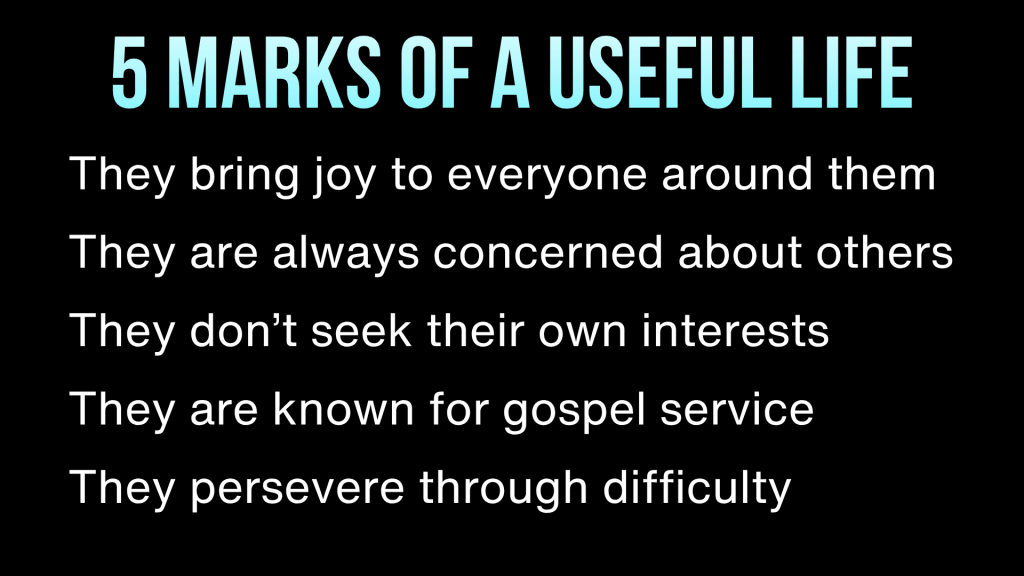
19I hope in the Lord Jesus to send Timothy to you soon, so that I too may be cheered by news of you. 20For I have no one like him, who will be genuinely concerned for your welfare. 21For they all seek their own interests, not those of Jesus Christ. 22But you know Timothy’sd proven worth, how as a sone with a father he has served with me in the gospel. 23I hope therefore to send him just as soon as I see how it will go with me, 24and I trust in the Lord that shortly I myself will come also.
25I have thought it necessary to send to you Epaphroditus my brother and fellow worker and fellow soldier, and your messenger and minister to my need, 26for he has been longing for you all and has been distressed because you heard that he was ill. 27Indeed he was ill, near to death. But God had mercy on him, and not only on him but on me also, lest I should have sorrow upon sorrow. 28I am the more eager to send him, therefore, that you may rejoice at seeing him again, and that I may be less anxious. 29So receive him in the Lord with all joy, and honor such men, 30for he nearly diedf for the work of Christ, risking his life to complete what was lacking in your service to me.
TEN POINTS TO PONDER
Timothy was a companion of Paul. Epaphroditus was a resident of Philippi. They were from two different countries, with vastly different life experiences. Yet they were united in their desire to serve God. Gospel service is a powerful unifier.
Epaphroditus was likely named after the Greek god Aphrodite. This indicates that he grew up in a home that didn’t know God or believe in Jesus. God saves people and uses people, no matter what their past looks like.
Paul wanted to hear news of the Philippians’ growth because he found great joy when others experienced good. The more we focus on others and the less we focus on ourselves, the easier it will be to live joyfully.
Even though Paul was the “leader of the band”, he spent a great deal of time speaking positively about and building up Timothy and Epaphroditus. No one ever regrets time spent building into the lives of others.
It is impossible to be Christ-centered and self-centered at the same time.
Epaphroditus not only brought the Philippians’ support gift to Paul, he also stayed to physically care for Paul in prison. He placed his own life on pause in order to further the Gospel by caring for Paul.
Even though Epaphroditus was a great blessing to Paul, Paul was eager to send him back to Philippi because Paul wanted the Philippians to be blessed by Paul.
Look at Philippians 4:3. It is possible that the greatest service Paul wanted Epaphroditus to render was to play the lead role in reconciling Euodia and Syntyche.
In God’s church, those who serve are worthy of the highest honor. Those who self-promote, demand respect, and pursue their own agenda are not to be honored.
The biggest impact makers in the Kingdom of God are those who are others-focused.
1-2-3 TO BE MORE USEFUL
The following 1-2-3 model can really be used to apply any biblical truth to your life. Today, we’re focused on how to be more useful to God.
1. IDENTIFY ONE AREA OF YOUR LIFE THAT NEEDS WORK
As you think through the different spheres of your life, you can probably identify “growth areas” in all of them. Just pick one. That way, you can be laser-focused without distraction. Possible areas of life include:
Family
Work
School
Neighborhood
Hobby Groups (sports, clubs, etc.)
Friends
Church
2. CHOOSE TWO USEFUL ACTIONS
When you think about actions that are useful, remember that useful people are joy-forward and others-focused. A good way to identify specific actions is to think of the word ACT.
ACTION – Is it something I can actually DO? Don’t just think about it, do it!
COMPLETABLE – How will I know when I’ve done it or finished it? Don’t be vague.
TIME-ORIENTED – Is it reasonable to accomplish in a reasonable amount of time?
SAMPLES:
I will text one friend an encouraging note every day before 10am tomorrow.
I will make a list of 10 things for which I’m grateful before bed every night.
I will post a helpful Bible verse on social media every day during my lunch break.
3. COMPLETE THE ACTIONS THREE TIMES THIS WEEK
Even if your goal is to do something every day, you will probably forget or get distracted every so often. Many people quit because they don’t think they can be perfect. DON’T LET PERFECT BE THE ENEMY OF DONE!
This week, shoot for three times. And when you accomplish it, celebrate and reward yourself!
Click on the image to download the DiscipleQuest PDF
The DiscipleQuest PDF includes 7 days of verse study prompts. You can use these seven studies to dig deeper into what the Bible teaches about focusing on others:
Romans 12:10
Mark 10:43-45
Micah 6:8
Galatians 6:2
1 Corinthians 10:24
John 13:14-15
Proverbs 11:25
Use these questions as journal prompts or as conversation starters with a group of friends or a Bible study group:
Who do you know that has earned the title, “servant”? Describe how they serve the people in their lives.
Read Philippians 2:19-30. The three main characters are Paul, Timothy, and Epaphroditus. How do you see each of them demonstrating a servant’s heart?
Based on what you read here, what is one word you would use to describe Timothy? What is one word you would use to describe Epaphroditus?
Verses 19,28,& 29 all describe joy. What is bringing joy to people in these verses? What does this tell you about how you can experience more joy?
Look at the three words Paul uses to describe Epaphroditus in verse 25. What might Epaphroditus have done to earn those titles? Who do you know that fits those descriptions?
Why is it so hard to focus on other people? Why is it so easy to focus on ourselves?
Make a list of ten ways Jesus focused on other people.
Make a list of five things people can do to focus on other people.
Who is one person you want to serve this week, and what is one action you will take to do so?
PHILIPPIANS: Line by Line
2:19-30: Finding joy by serving others
19. I hope in the Lord Jesus to send Timothy to you soon, so that I too may be cheered by news of you.
Timothy was Paul’s right-hand man. He did for Paul what Paul couldn’t do for himself, and since Paul couldn’t leave Rome (prison), he was going to send Timothy to help build up the Philippians. Nothing made Paul happier than hearing that his spiritual children were growing in their faith.
20. For I have no one like him, who will be genuinely concerned for your welfare.
Most people will express or demonstrate a little concern for others, but it is not a deep, genuine concern. Timothy was unique because he always put others ahead of himself. He was passionately concerned to see as many people grow in their faith as possible.
21.For they all seek their own interests, not those of Jesus Christ.
Most people put their own desires and needs ahead of everyone else. Interestingly here, Paul seems to indicate that the interests of Jesus intersect with the interests of others. When I am others-focused, I will have the same life focus as Jesus. As long as I am focused on myself, I will not see the world the way Jesus does.
22a. But you know Timothy’s proven worth…
Timothy had already demonstrated his hear and his abilities. His value was well-known throughout the early church communities. There is no better reputation to have than as a servant.
22b. …how as a son with a father he has served with me in the gospel.
Paul had poured his life into Timothy, and now Timothy was beginning to look more and more like Paul. It’s as though Paul’s spiritual DNA has been passed along to Timothy and now the young man shares the older man’s passion to see the gospel spread to every nation.
23. I hope therefore to send him just as soon as I see how it will go with me,
Paul was waiting for a verdict in his trial. He didn’t know if he would be executed or freed. It is likely that Timothy wouldn’t leave his side until this matter was settled, but Paul assured the Philippians that he would be sending the young man as soon as possible.
24. And I trust in the Lord that shortly I myself will come also.
Here, Paul hints that he hopes and believes that he will be set free. As he said in 1:22, if he is given more time, he is fully dedicated to serving more and ministering more. Therefore, if he is released, his plan is to travel to Philippi so that he can encourage and build up the Christians there.
25a. I have thought it necessary to send to you Epaphroditus…
Paul “hoped” to send Timothy, but he found it “necessary” to send Epaphroditus. Even though Epaphroditus was a great help and comfort to Paul, the apostle’s desire was to have Epaphroditus serve the church in Philippi. Their growth was more important than his comfort.
It appears that Epaphroditus is named after the Greek goddess Aphrodite. This leads us to believe that he was saved out of a family that passionately served the false gods of their day. He is a living picture of the mercy and grace of God that often pulls us out of our sin and situation so He can save us to a much higher purpose.
25b. …my brother and fellow worker and fellow soldier…
Paul describes the closeness of his relationship with Epaphroditus (brother). He elevates Epaphroditus by naming him as a “fellow worker” when he could have easily described him as an assistant, a helper, or a student. He also hints at Epaphroditus’ tenacity and spirit by naming him as a fellow soldier. The gospel work was difficult, dangerous, and sometimes painful. Epaphroditus never shied away from any of it.
25c. …and your messenger and minister to my need…
Epaphroditus was probably from Philippi and had been sent by the church to deliver a message to Paul as well as to bring gifts and financial support to him. Additionally, Epaphroditus stayed on after delivering the gifts so that he could provide physical care and comfort to Paul while he was in prison.
26. For he has been longing for you all and has been distressed because you heard that he was ill.
Epaphroditus was not upset or anxious because of his own illness, but he was distressed because the Philippians were distressed. This is the true heart of a servant. He didn’t want his friends to be concerned or upset, even if they were doing so for him. He wanted to do whatever he could to bring peace and joy to the people in his life.
27a. Indeed he was ill, near to death.
We are not sure if Epaphroditus became ill while delivering the message to Paul (it may have been a difficult trip), or if he became ill while helping to care for Paul. Whichever it was, he continued on with his service until his illness became life-threatening. He placed the lives of everyone else above his own.
27b. But God had mercy on him…
Anytime our life is extended (in sickness or in health), it is because of God’s mercy and grace. We deserve nothing from Him, but He generously gives us life in His creation. The healing He provided to Epaphroditus was an obvious act of mercy, and it should cause us to consider how God has also been merciful to us. The mercy of God should always drive us to gratitude.
27c. …and not only on him but on me also, lest I should have sorrow upon sorrow.
Paul was already in prison and in danger of losing his life. Had Epaphroditus died, it would have been one more difficulty piled on top. He was grateful that God spared him from that sorrow.
28a. I am the more eager to send him, therefore…
Epaphroditus was a picture of grace and mercy to Paul. His service and delivery of a gift was a sign of God’s (and the Philippians’) grace to him. His healing was a sign of God’s mercy. Now, even though he had done so much, Paul wanted to send him away. He wanted the Philippians to also experience the grace and mercy of God through the work and leadership of Epaphroditus.
28b. …that you may rejoice at seeing him again, and that I may be less anxious.
Epaphroditus’ return to Philippi meant more stability for the church there. It meant they would have one of their leaders back. It meant they would have more opportunities to grow spiritually because of his ministry. For all of these reasons, it would mean joy for the Philippians, and it would mean joy for Paul. Paul was anxious for them to grow, and Epaphroditus’ return would facilitate that growth.
29. So receive him in the Lord with all joy, and honor such men…
Paul expected the Philippians to give Epaphroditus a warm welcome, and he expected the church to take good care of Epaphroditus and Timothy (upon his arrival).
30a. …for he nearly died for the work of Christ…
The illness Epaphroditus suffered was because he was faithful to his calling. Had he bailed from his job, he likely would not have become ill and he certainly would not have continued to worsen. The decision to follow Jesus requires us to be willing to give our lives. If we love our own life more than we love Him, we may not actually be ready to follow Him.
30b. …risking his life to complete what was lacking in your service to me.
The Philippians sent a wonderful gift to Paul (4:18). But what they couldn’t give him was their physical presence. Epaphroditus provided that.
Therefore, my beloved, as you have always obeyed, so now, not only as in my presence but much more in my absence, work out your own salvation with fear and trembling, for it is God who works in you, both to will and to work for his good pleasure. Do all things without grumbling or disputing, that you may be blameless and innocent, children of God without blemish in the midst of a crooked and twisted generation, among whom you shine as lights in the world, holding fast to the word of life, so that in the day of Christ I may be proud that I did not run in vain or labor in vain. Even if I am to be poured out as a drink offering upon the sacrificial offering of your faith, I am glad and rejoice with you all. Likewise you also should be glad and rejoice with me.
TEN POINTS TO PONDER
How we behave when no one is watching is one of the most certain reflections of our character. Paul wanted the Philippians to demonstrate the depth of their character by remaining faithful even when he wasn’t around.
Working out our faith is similar to working out our muscles. The workout doesn’t make the muscles, it simply produces a better result. God saves us, but we must do work to produce the external results of what He’s done internally.
“Fear and trembling” is a reminder that we must take God seriously. Sometimes our life doesn’t produce maximum fruit because we don’t take God seriously.
Only you can choose whether you grumble or whether you are grateful.
Grumbling is a short-sighted and prideful response to disappointment.
Blameless means “no cause for accusation.” Innocent means “no cause for fear.” Without blemish means “no compromise.”
“Crooked and twisted generation” is a quote from Deuteronomy 32:5. It represents people who know the truth about God but choose to reject it.
Holding fast the word of life is impossible if the majority of your words are words of death. Those who consistently grumble, dispute, gossip, judge, complain, and condemn are speaking holding fast to words of death.
Whether I am glad or grumbling is not determined by my circumstances. It is determined by my perspective and my response.
Gladness is cultivated through intentional gratitude.
STRAIGHT FROM THE BIBLE: FIVE REASONS GRATITUDE WILL CHANGE YOUR LIFE
Gratitude is a simple habit to build, and it will have a profound impact on your life. The Bible is clear that the more gratitude you exhibit, the more you will experience the life God created you to live. Here are five reasons the Bible says gratitude is good for you.Gratitude Will Change Your Life
Gratitude can bring joy to our lives. “I will give thanks to the Lord because of his righteousness and will sing praise to the name of the Lord Most High.” (Psalm 7:17)
Gratitude can strengthen our relationships. “Give thanks in all circumstances; for this is God’s will for you in Christ Jesus.” (1 Thessalonians 5:18)
Gratitude can improve our mental and physical health. “A cheerful heart is good medicine, but a crushed spirit dries up the bones.” (Proverbs 17:22)
Gratitude can increase overall happiness. “Rejoice always, pray continually, give thanks in all circumstances; for this is God’s will for you in Christ Jesus.” (1 Thessalonians 5:16-18)
Gratitude can bring us closer to God. “Give thanks to the Lord, for he is good; his love endures forever.” (Psalm 107:1)
Click on the image to download the DiscipleQuest PDF
The DiscipleQuest PDF includes 7 days of verse study prompts. You can use these seven studies to dig deeper into what the Bible teaches about grumbling:
James 5:9-11
John 6:43
Jude 1:16
Ephesians 4:29-32
Numbers 11:1
Psalm 106:24-25
Exodus 16:8
Use these questions as journal prompts or as conversation starters with a group of friends or a Bible study group:
When was the last time someone said thank you to you? Did you deserve it? Had you done something amazing or was it just a small thing?
When was the last time someone didn’t thank you for something you did for them? How did you feel about that?
Read Psalm 105:1-8.
Which verse in this passage is your favorite? Why?
Are there any verses in this passage that are confusing? Can the group help?
How would you summarize this passage using only one sentence?
Verse one says to “Give thanks to the LORD” and to “make known among the nations what he has done.” How are these two activities different? Give specific examples of how you might obey each of these instructions?
As a group, make a list of 50 things God has accomplished for you.
Verse 8 says God remembers his covenant (or promise) forever. Which of God’s promises are most meaningful to you? Why?
How is your perspective on life’s situations changed when you spend extra time focusing on the good things God has done for you?
What can you do to make this kind of reflection a daily habit in your life?
2:12-18: Avoid grumbling and disputes
12a. Therefore.
This word reminds us that the following verses are connected to the previous verses. Jesus’ work on our behalf has implications for how we live. Our actions should reflect His action.
12b. my beloved, as you have always obeyed, so now, not only as in my presence but much more in my absence, work out your own salvation with fear and trembling.
Paul wanted their lives to be consistent whether he was with them or not. The Christian life is not a part-time job. It is a 24/7 commitment to being shaped into the image of Jesus. “Working out salvation” is clarified by the following verse. God works IN us, changing us internally. Our response is to allow those internal changes to work their way out. This isn’t a verse about losing or earning salvation, it is about producing the natural results of one who has been saved by God.
13. for it is God who works in you, both to will and to work for his good pleasure.
God is the prime mover and actor in salvation. He gives grace to us. He sent Jesus for us. He raised Jesus for us. He (through the Spirit) draws us and convicts us. He forgives our sins. He declares us to be not guilty. He holds our inheritance for us in heaven. He will welcome us into eternity. He does all of this in us, around us, through us, and for us.
14. Do all things without grumbling or disputing.
Here is the command Paul wanted the Philippians to obey. Grumbling is a personal expression of displeasure. Disputing is a relational expression of displeasure. Both are actions that reveal a spirit of discontent. Those who truly grasp what Jesus did for them will have a hard time being discontented with life. They know they have been given something far beyond anything they could earn.
15a. that you may be blameless and innocent, children of God without blemish in the midst of a crooked and twisted generation,
People are watching. That’s why Paul wants Christians to be joyful and unified. When we complain all the time, fight all the time, or carry a negative disposition all the time, we give the world an excuse to avoid Christ. Why would anyone want what we have if it makes us miserable all the time? Those who are watching us are far from God. They have bought into a worldview that is crooked and twisted and leads only to death. They desperately need Jesus. Our attitude should leave people with no reason to judge us.
15-16. among whom you shine as lights in the world, holding fast to the work of life,
In a world full of darkness, our attitude should brighten the world of everyone around us. We do so by holding fast to the word of life. Holding fast means we don’t change or move when placed under pressure. The word of life is at one level Jesus, and at another level, the Gospel. When our life’s pursuit is to be like Jesus and spread the Gospel, and when we hold fast to that, even thought the world is completely opposed, there will be some who will see the light.
16b. so that in the day of Christ I may be proud that I did not run in vain or labor in vain.
The day of Christ is the end of all things. Paul is looking ahead to that day, knowing that He and the Philippians will be there together. He hopes that their faithfulness will be a reflection of his own faithfulness.
17. Even if I am to be poured out as a drink offering upon the sacrificial offering of your faith, I am glad and rejoice with you all.
A drink offering was an ancient practice of emptying a cup of wine or another liquid as a symbol of complete dedication to a cause. Paul was willing to do whatever it took to demonstrate faithfulness to the Philippians, so that they would also be faithful. His words here are a powerful reminder that we are never alone in our faith. Our actions, words, and attitudes impact other believers, either fo good or for bad. Despite his difficult situation, Paul is choosing an attitude that will encourage the Philippians.
18. Likewise you also should be glad and rejoice with me.
Finally, Paul returns to the initial command. This time, he frames it positively. Be glad and rejoice. Do not grumble and dispute. Grumbling is not a necessary response to a bad situation. It is a choice to hold a limited or victim mentality. Even if difficult situations (like Paul’s), we can choose to be glad by choosing a perspective that relies on Jesus Christ’s demonstrated (see verses 6-11) love for us. Knowing that the risen Son of God is in our corner means we never have a valid reason to grumble. It means we can be glad and rejoice regardless of life’s circumstances.